








The Central American Agouti (Dasyprocta punctata), or guatusa, is a medium-sized rodent common in Costa Rica’s forests. Known as “forest gardeners,” they feed on fruits and nuts, bury seeds in the ground, and help regenerate tropical ecosystems.
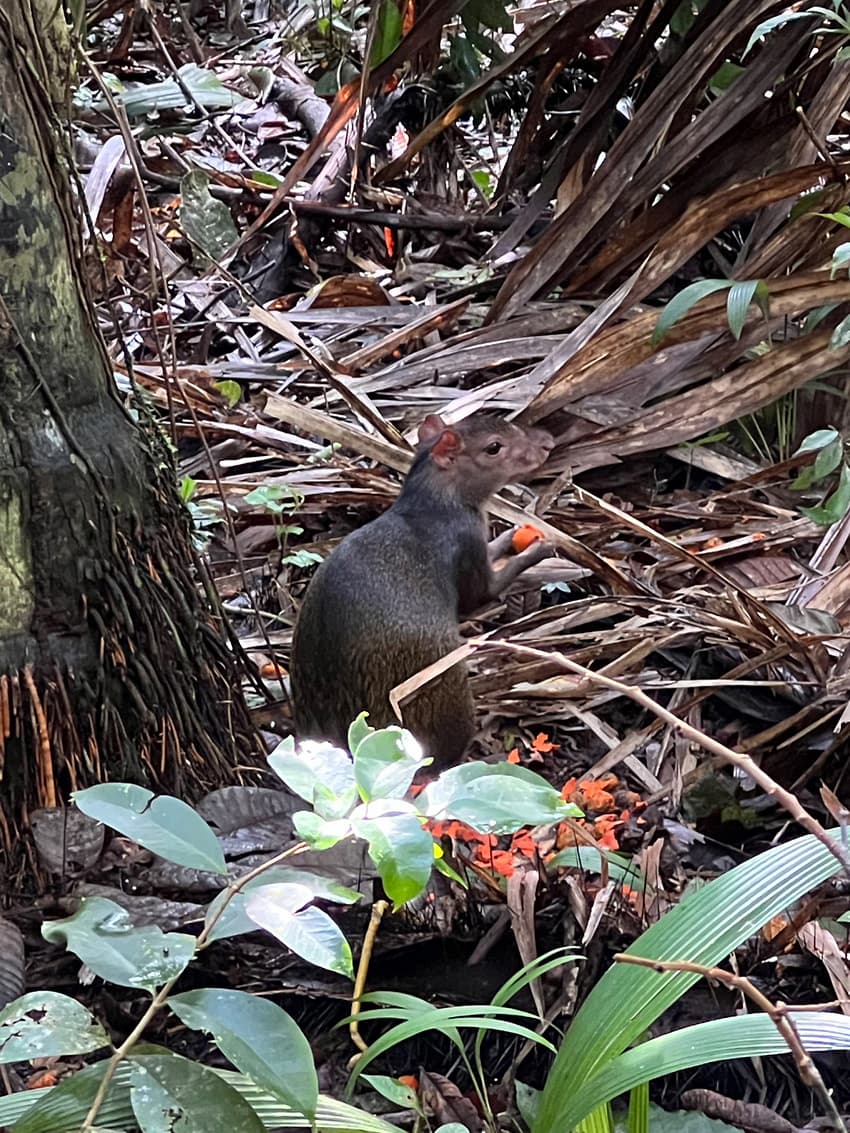
RangeThe Central American agouti is distributed from southern Mexico through Central America, including Costa Rica, and into northwestern South America (Colombia, Ecuador, Venezuela, and parts of Peru).
BehaviorAgoutis are diurnal and most active in the morning and late afternoon. They are generally shy but can be seen foraging along trails in national parks. When threatened, they can run with remarkable speed and leap into thick vegetation. They often live in pairs or small family groups, communicating through soft vocalizations and foot stamping. Agoutis play a vital ecological role as seed dispersers: they bury nuts and fruits for later consumption, and those that remain forgotten sprout into new trees, making agoutis essential for maintaining forest diversity.
ReproductionUsually monogamous pairs or small family groups. Very territorial, mark their area with scent glands.
Gestation: ~3 months, 1–2 young per litter.
Young are born fully furred and able to run within an hour.
Lifespan is exceptionally long for a rodent.
🧬 SpecificationName: Agouti / Guatusa
Latin name: Dasyprocta punctata
Family: Dasyproctidae
Body length: 40–60 cm
Weight: 2–4 kg
Intellegence: Moderate
Lifespan: 12–15 years
Danger: Harmless



















🎁 Fun Fact:
Agoutis are one of the few mammals able to crack open Brazil nuts with their sharp teeth — something even monkeys struggle with! This makes them crucial for spreading Brazil nut trees across tropical forests.

⚠️ Advice:
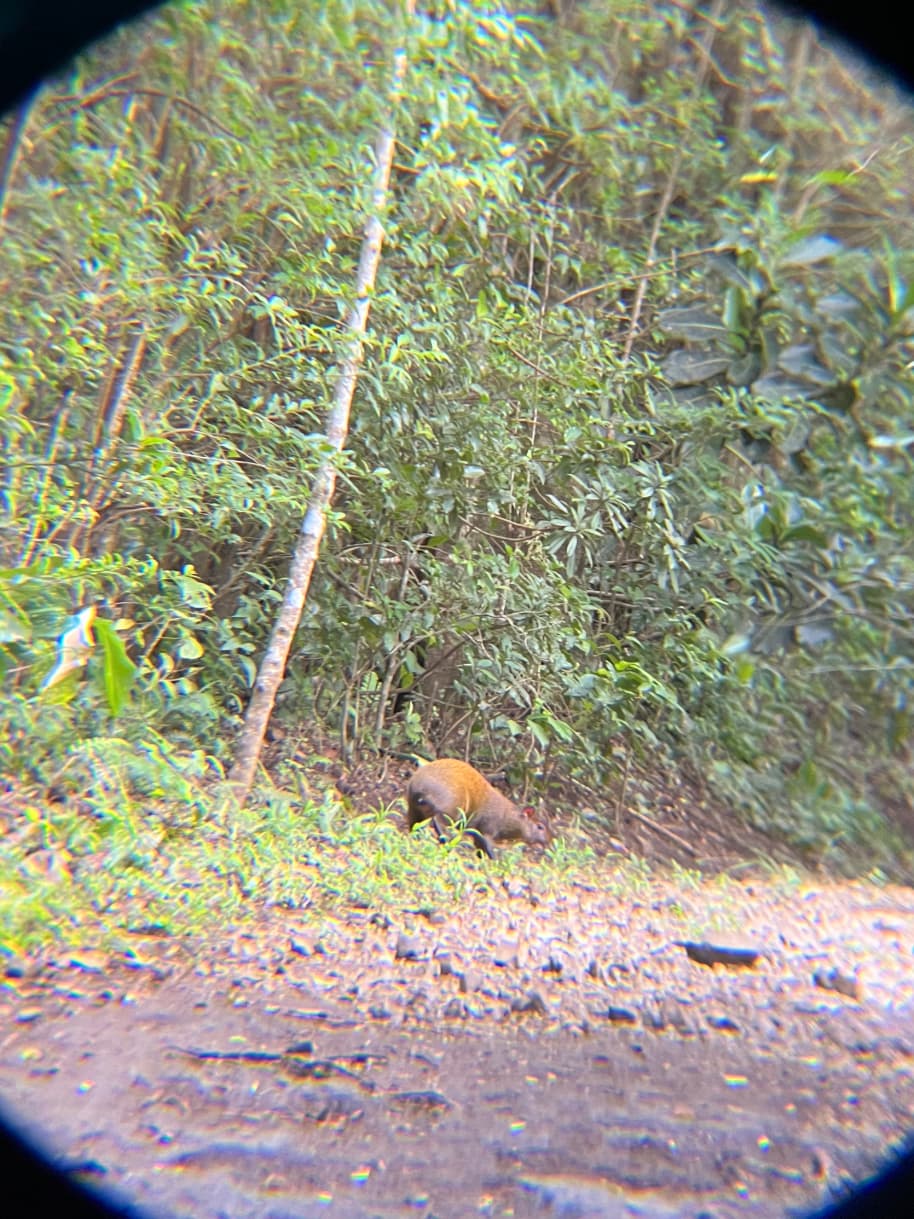
- Best time to see: Morning and late afternoon, when agoutis are most active searching for fallen fruits.
- How to behave: Stay quiet and still — agoutis are shy but curious. If you move slowly, they may continue foraging nearby.
- Don’t feed them: Human food can harm their health and make them dependent.
- Photography tip: Watch for them near fruiting trees; they often return to the same spots daily.