








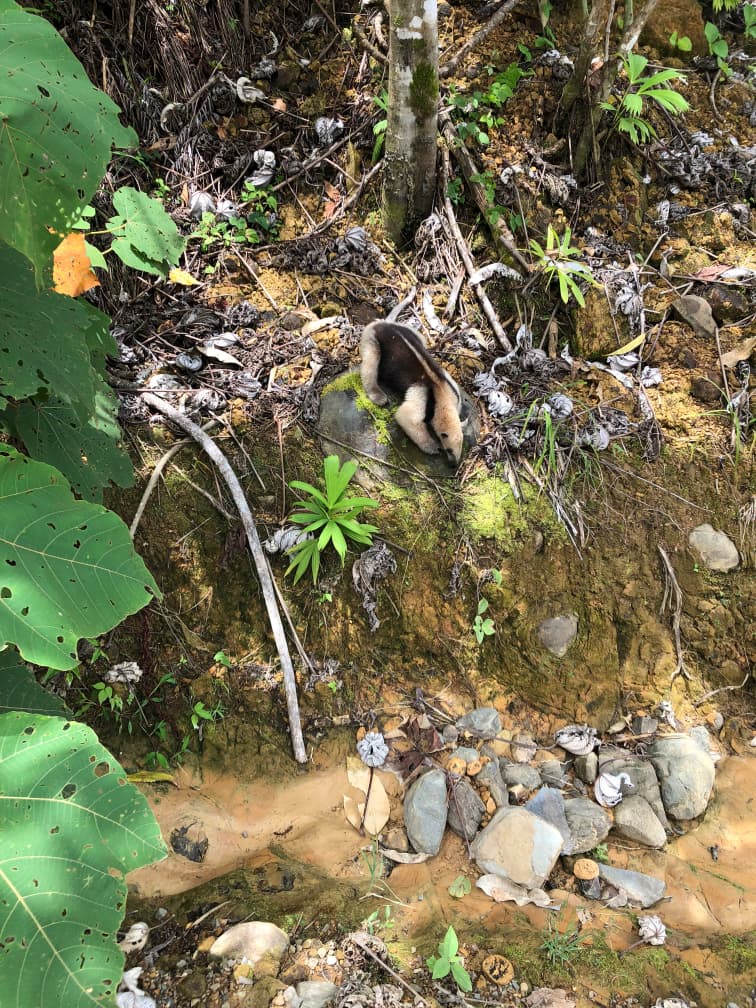
The Costa Rican Anteater (Tamandua mexicana) is a medium-sized mammal known for its black “vest” pattern and long sticky tongue, which it uses to feed on thousands of ants and termites each day. Although common in Costa Rica’s forests, it is rarely seen due to its solitary and quiet lifestyle.
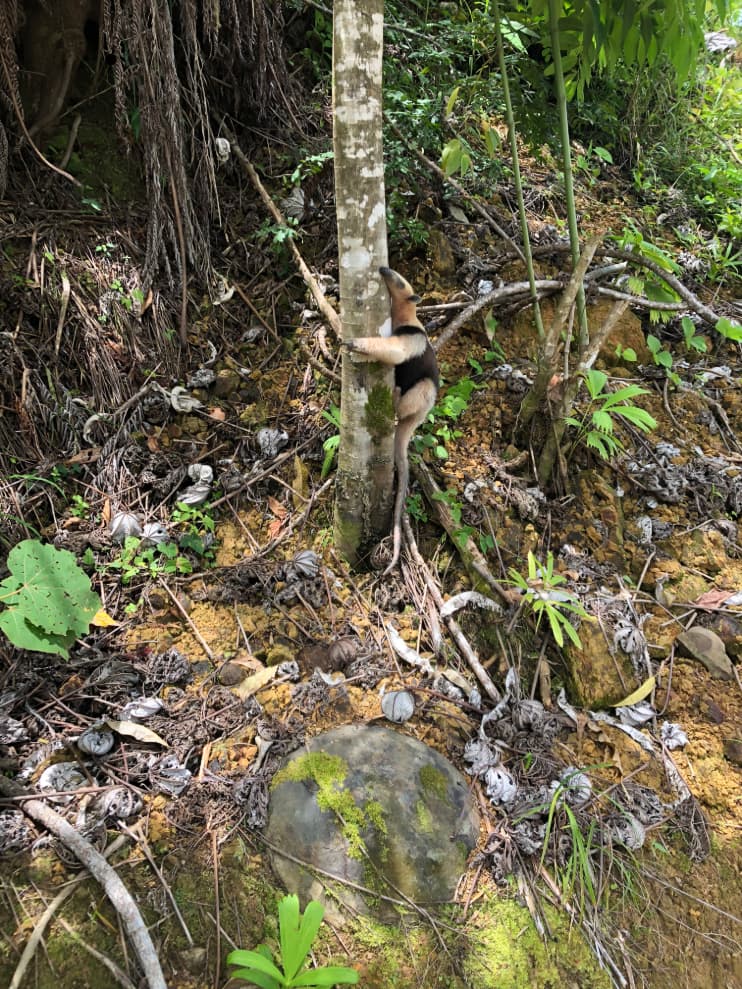
RangeThe Northern Tamandua lives in tropical rainforests and secondary forests across Costa Rica.
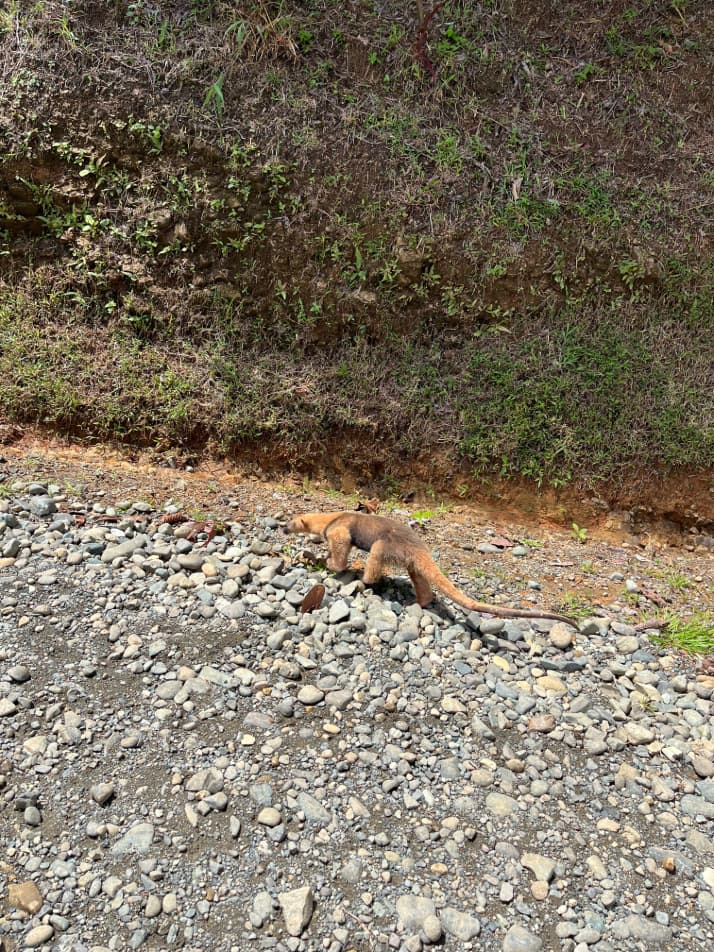
They are equally skilled at climbing trees and walking on the ground, using their strong prehensile tail for balance.
BehaviorMainly nocturnal, but also active during the day. Specialized insectivores: ants, termites, wasps, sometimes honey and bee larvae.
They use their long sticky tongue (up to 40 cm) to reach insects inside nests and logs. Generally shy and avoid contact, but will defend themselves with powerful foreclaws.
When threatened, they stand on hind legs, using their tail for support, and strike with long claws — a surprisingly strong defense for such a calm animal.
ReproductionSolitary animals, except during mating season.
Pregnancy lasts about 130–150 days, usually producing a single offspring.
Mothers carry young on their backs until they can climb independently.
🧬 Specification Latin name: Tamandua mexicana
Family: Myrmecophagidae
Size: 50–88 cm
Tail: 40–67 cm
Weight: 3–5.5 kg
Intellegence: Below average
Lifespan: 9–12 years
Danger: No


















🎁 Fun Fact:
Despite being insectivores, tamanduas have no teeth at all. Instead, they rely entirely on their sticky tongue and powerful stomach to crush and digest insects. Their stomach lining is tough, resistant even to ant bites and stings.
⚠️ Advice:
If you encounter a tamandua in the wild:
- Observe quietly — they are shy and usually avoid humans.
- Don’t try to touch or feed them — they eat only insects and can get stressed.
- If threatened, they may rear up and display their claws — give them space and admire from a distance.
- Best chances to spot one are during night tours or early mornings in Costa Rica’s rainforests.