





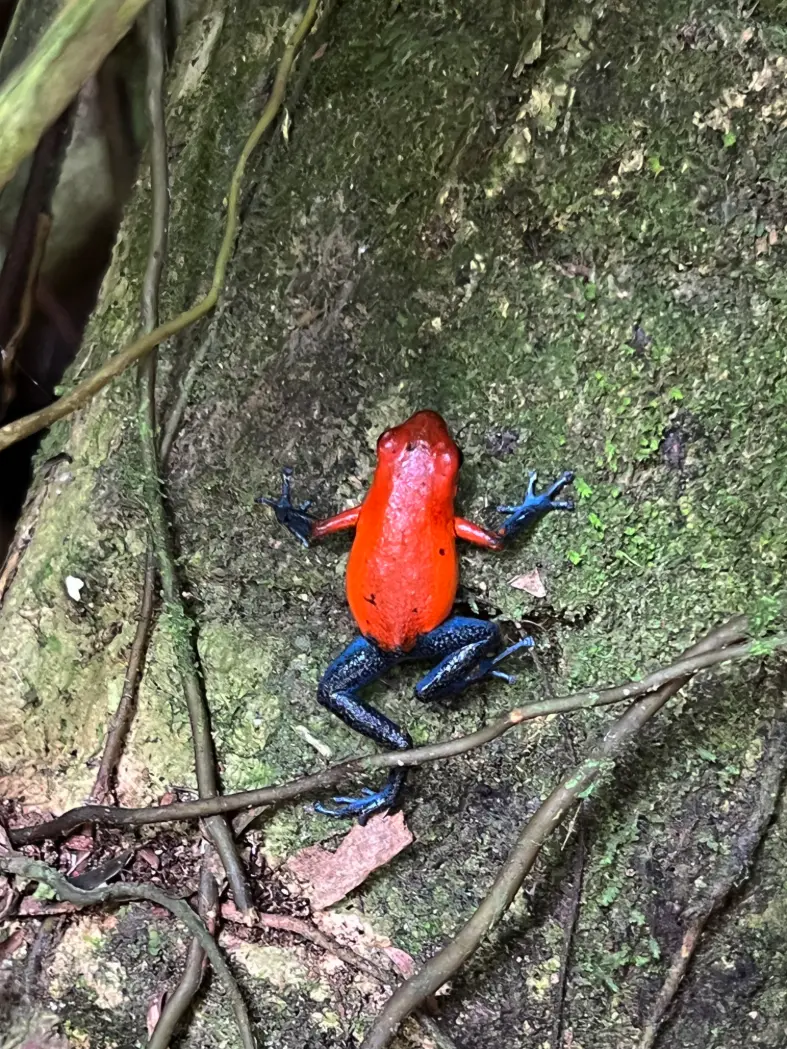
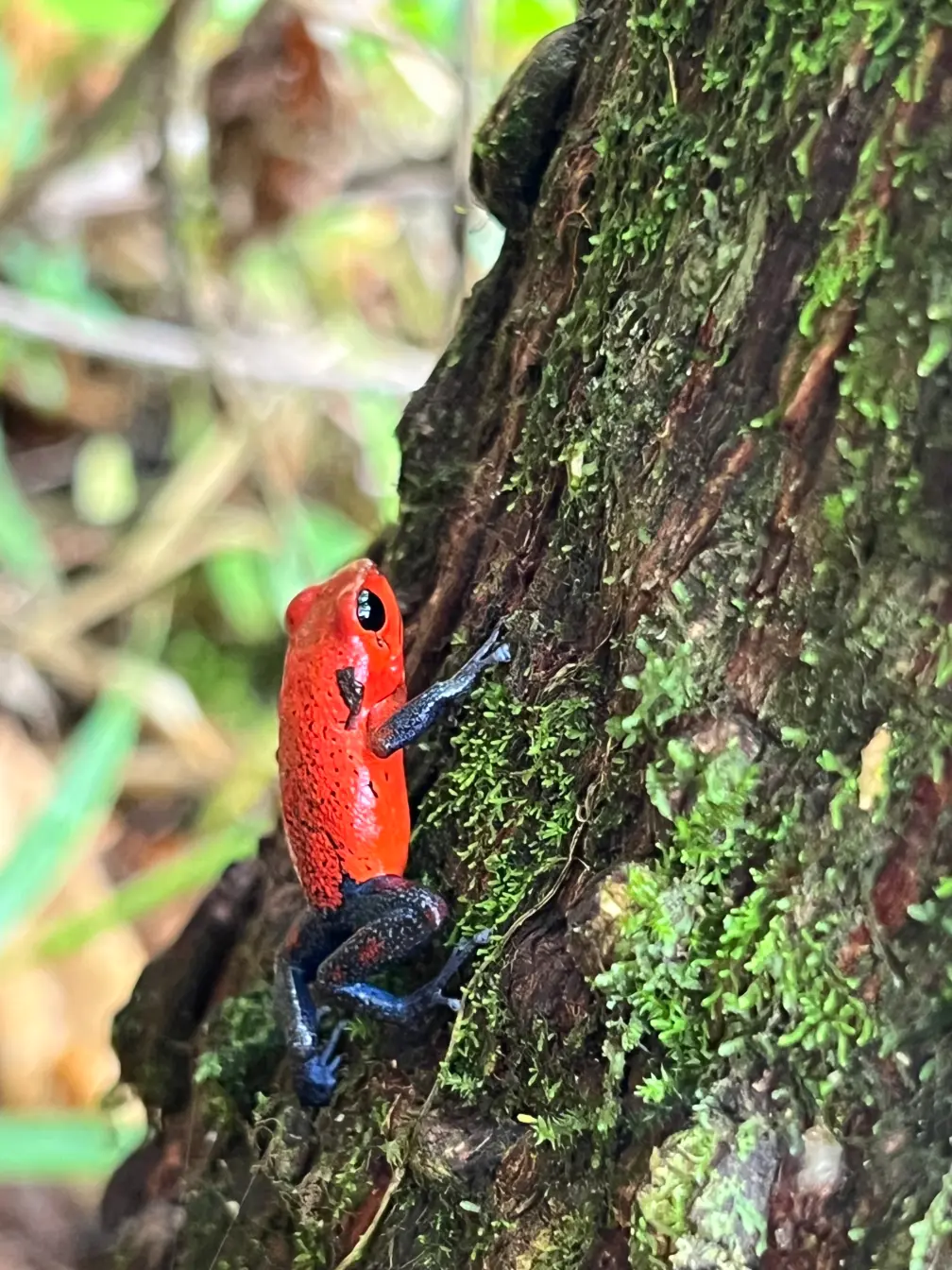
The Blue Jeans Frog (Oophaga pumilio) is a tiny yet striking amphibian found in Costa Rica’s rainforests. With its bright red body and dark blue legs, it is one of the most iconic poison dart frogs in the world. Despite its small size, it plays an important role in the ecosystem and is a favorite among nature enthusiasts and photographers.
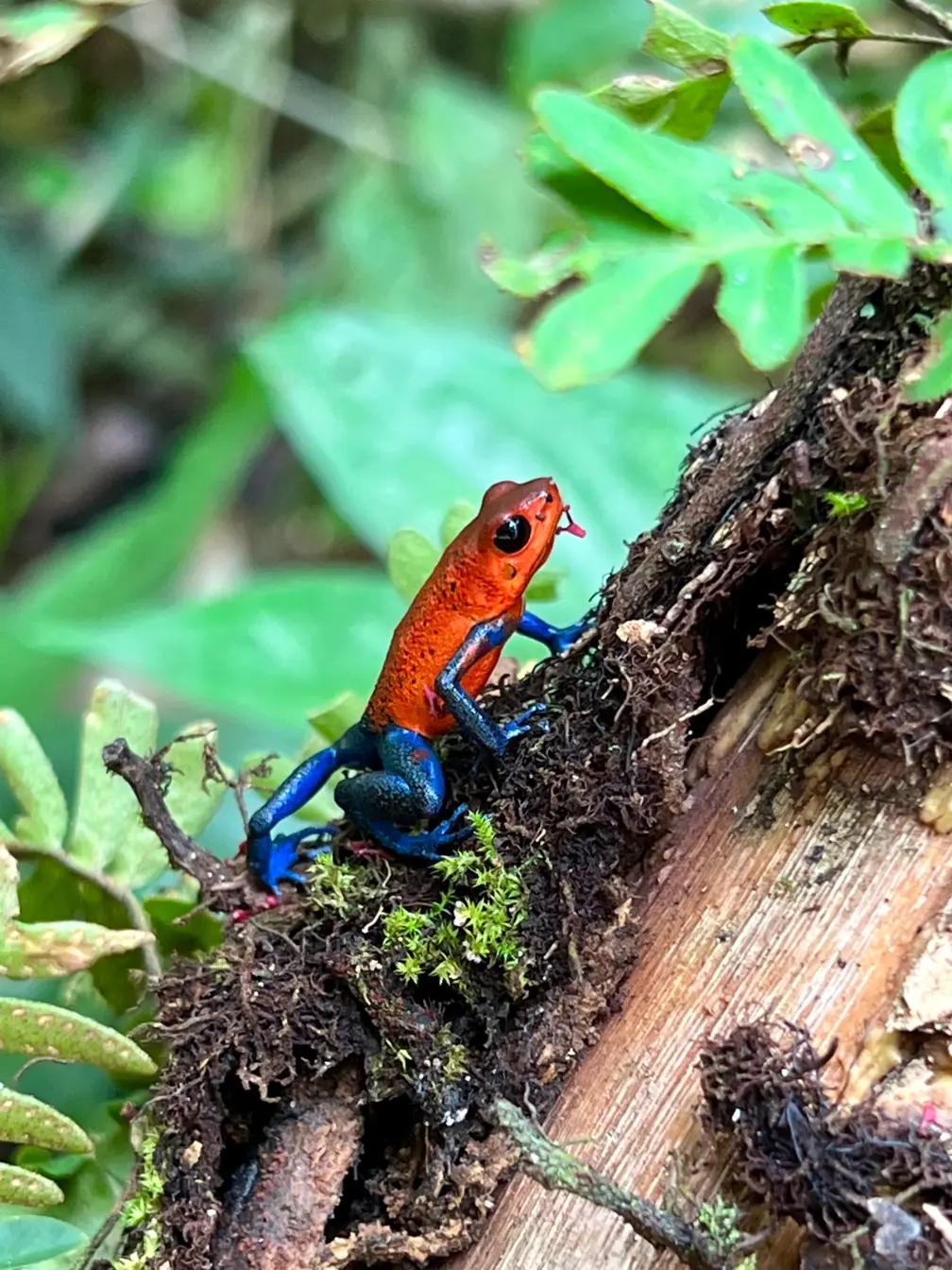
RangeThe Blue Jeans Frog inhabits humid lowland rainforests and plantations, typically near streams.They live in the forests of Central America, especially in Costa Rica and Nicaragua.
BehaviorThese frogs are insectivores, feeding mainly on: ants, mites, small beetles, tiny invertebrates.
Their diet directly affects their toxicity — chemicals from ants and mites are transformed into skin toxins.
ReproductionMales are territorial and produce a soft trilling call to attract females. After mating, females lay eggs on leaves; males guard them. Once hatched, the female carries each tadpole on her back to small pools of water in bromeliads or tree holes. She returns regularly to feed them with unfertilized eggs — a rare form of parental care among amphibians.
PoisonBlue Jeans Frogs are toxic, but not lethal to humans.
Their skin secretes alkaloid toxins that deter predators.
Handling them is discouraged, since toxins can irritate skin and also stress the frog.
Specification 🐸Latin name: Oophaga pumilio
Family: Dendrobatidae (poison dart frogs)
Size: 17–24 mm
Weight: ~1–2 grams
Lifespan: 4–6 years

















🎁 Fun Fact:
The Blue Jeans Frog is one of the most photographed amphibians in Costa Rica due to its striking colors. Its “blue jeans” look makes it instantly recognizable.Despite its tiny size, locals sometimes call it the “little guard of the forest”, since its presence often indicates a healthy, untouched ecosystem.
⚠️ Advice:
If you see a Blue Jeans Frog on a rainforest trail:
- admire it from a distance,
- never touch or disturb it,
- use a camera with zoom for photos.
Their beauty is best enjoyed with eyes, not hands.