




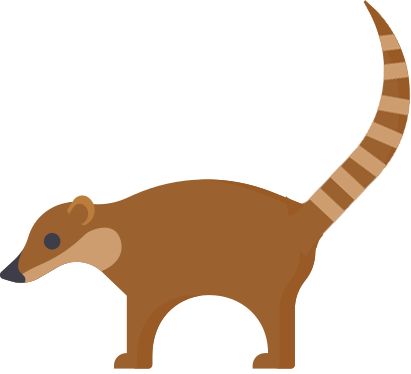


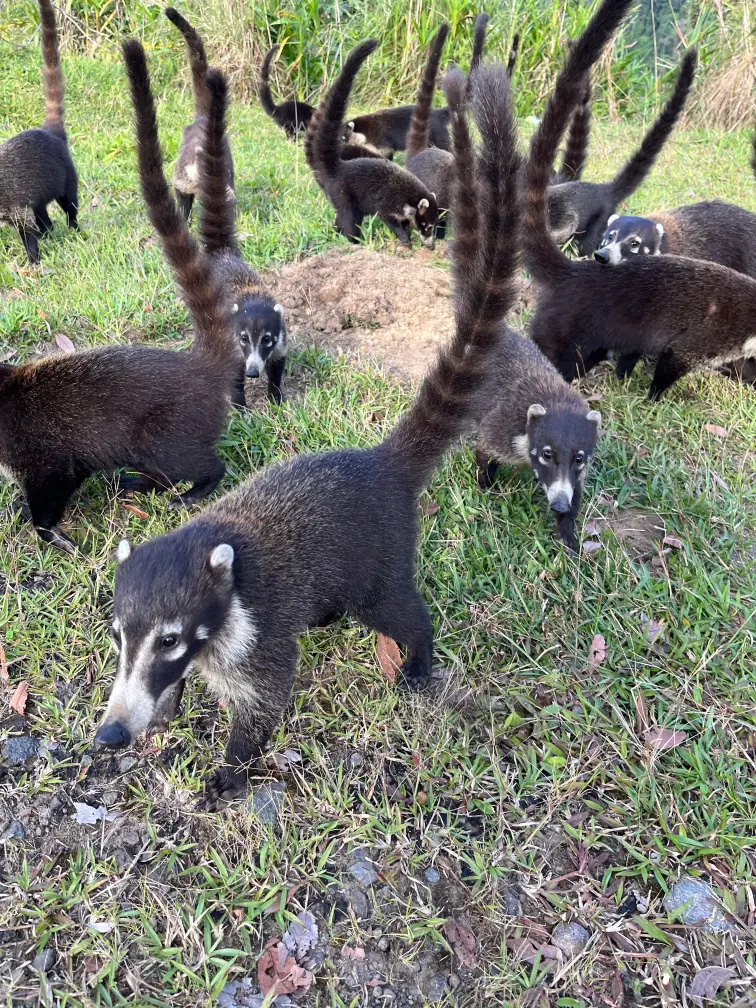
The coati is a medium-sized animal with an elongated, mobile nose and a long, ringed tail, which is often held upright like a flag.
The coat color ranges from grayish-brown to reddish-brown, the muzzle is often light, with a dark mask.
They are agile and dexterous tree climbers. They have strong paws with claws for digging and climbing.
.jpg)
RangeCoatis live across Central and South America, from southern Arizona and Mexico to northern Argentina.
They prefer tropical and subtropical forests, but are also found in shrublands, mountainous areas, and mangroves. They easily adapt to areas near human settlements, especially in national parks and reserves.
BehaviorCoatis are diurnal (active during the day) and very social.
Females and juveniles form bands of 10–30 individuals, while adult males are mostly solitary, especially outside mating season.
Coatis are not poisonous.
However, like many wild animals, they can bite or scratch when threatened. Especially if they are protecting their offspring or food.
They have strong jaws and claws.
ReproductionOnce a year, the female gives birth to 2 to 7 cubs after a pregnancy lasting about 77 days.
The cubs are born in a nest in a tree, where they remain for the first weeks of their lives.
🧬 SpecificationName: Coati
Latin name: Nasua narica
Family: Procyonidae (raccoon family)
Body length: 40–70 cm
Tail length: 40-60 cm
Weight: 3–7 kg
Intellegence: Highly intellegent
Lifespan: up to 14 years
Danger: Not aggresive but can bite


















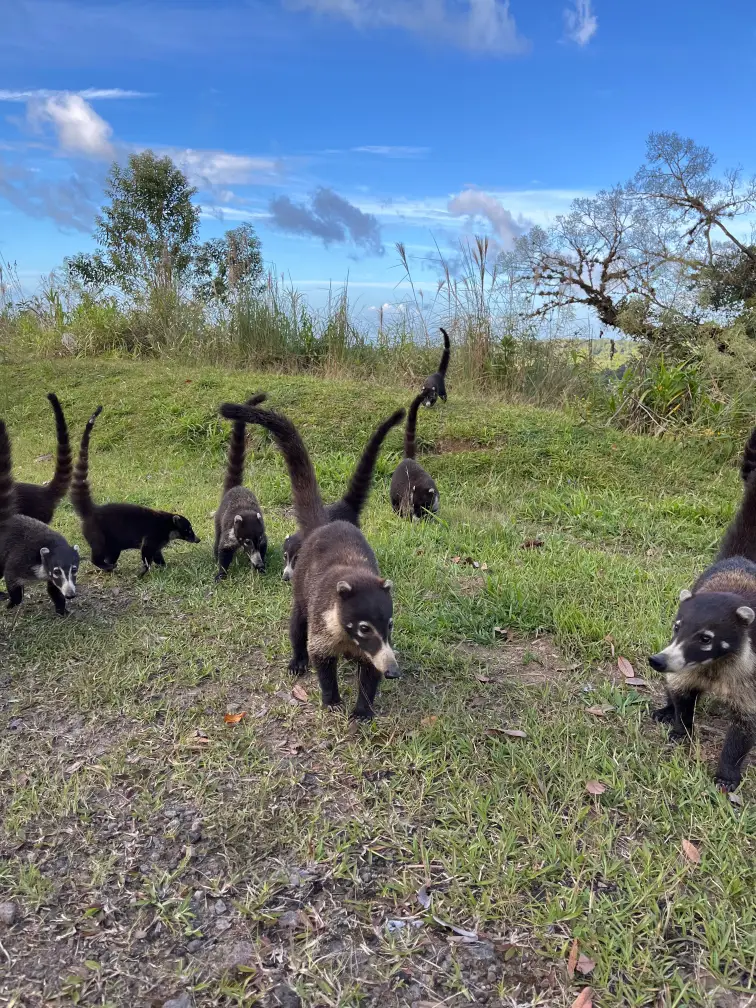
🎁 Fun Fact: Coatis are highly intelligent and capable of learning quickly. They’ve been observed opening latches, garbage bins, and even doors to access food. They also use a range of vocalizations, scents, and visual signals to communicate — including chirps, snorts, and tail movements to stay connected in dense vegetation. They are also one of the few mammals that can consciously use their tail to communicate - raising it vertically so that other members of the group can see each other in the tall grass. Coatis can distinguish up to 150 different fruits by smell!
⚠️ Advice:
If you encounter a coati in the wild — especially in national parks across Costa Rica or Mexico — resist the urge to feed or pet them, even if they seem friendly or curious. Feeding wild animals may seem harmless, but it teaches them to rely on people, leads to aggressive behavior, and can harm their health.
Coatis are naturally skilled foragers — trust their instincts!
Instead, enjoy observing them from a respectful distance. If you're patient and quiet, you might even witness fascinating behaviors like tail signals or group communication. And don’t forget — they make great photo subjects, but only when you’re not interfering with their natural rhythm.
Let wild stay wild. 🐾