







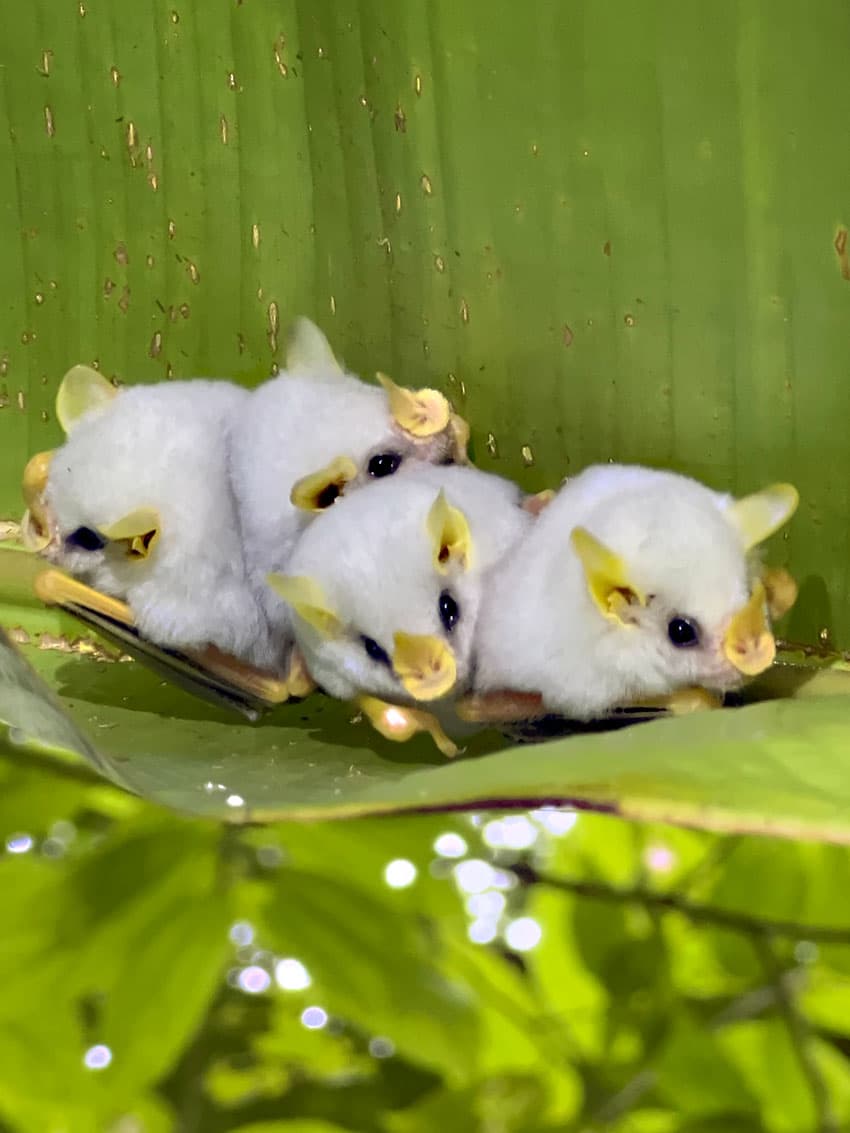
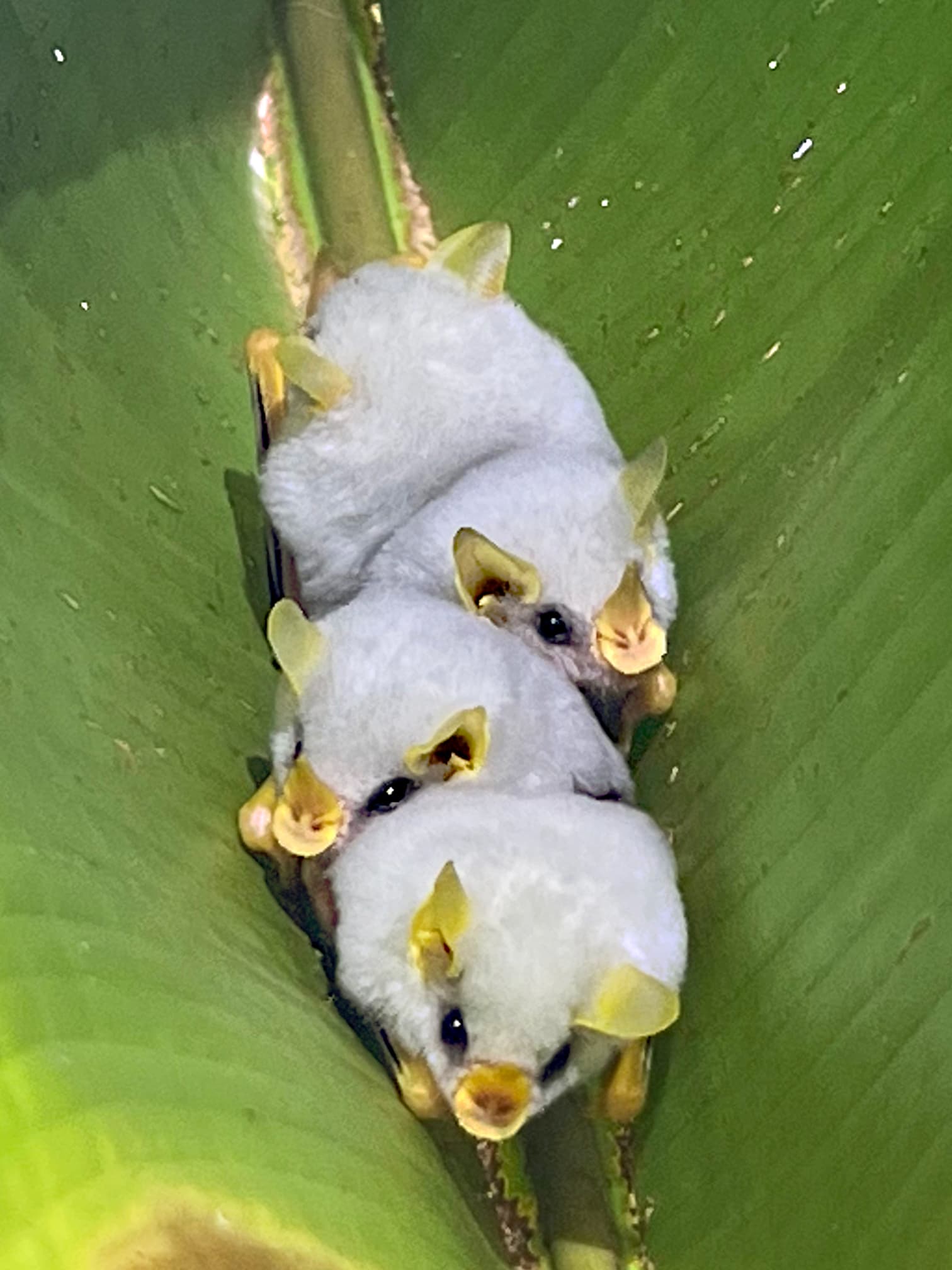
The Honduran White Bat (Ectophylla alba) is a tiny, snow-white bat of Costa Rica’s rainforests. It builds leaf tents for shelter and feeds mainly on figs, playing a key role in forest regeneration. Rare and striking, it is one of the most unique mammals of the tropics.
RangeIts range is narrow and limited—this species is found only in Central America. Honduras (from which the species received its English name, Honduran White Bat), Nicaragua, Costa Rica—one of the key countries for observations, and Panama (western regions). Found in lowland tropical rainforests below 700 m elevation.
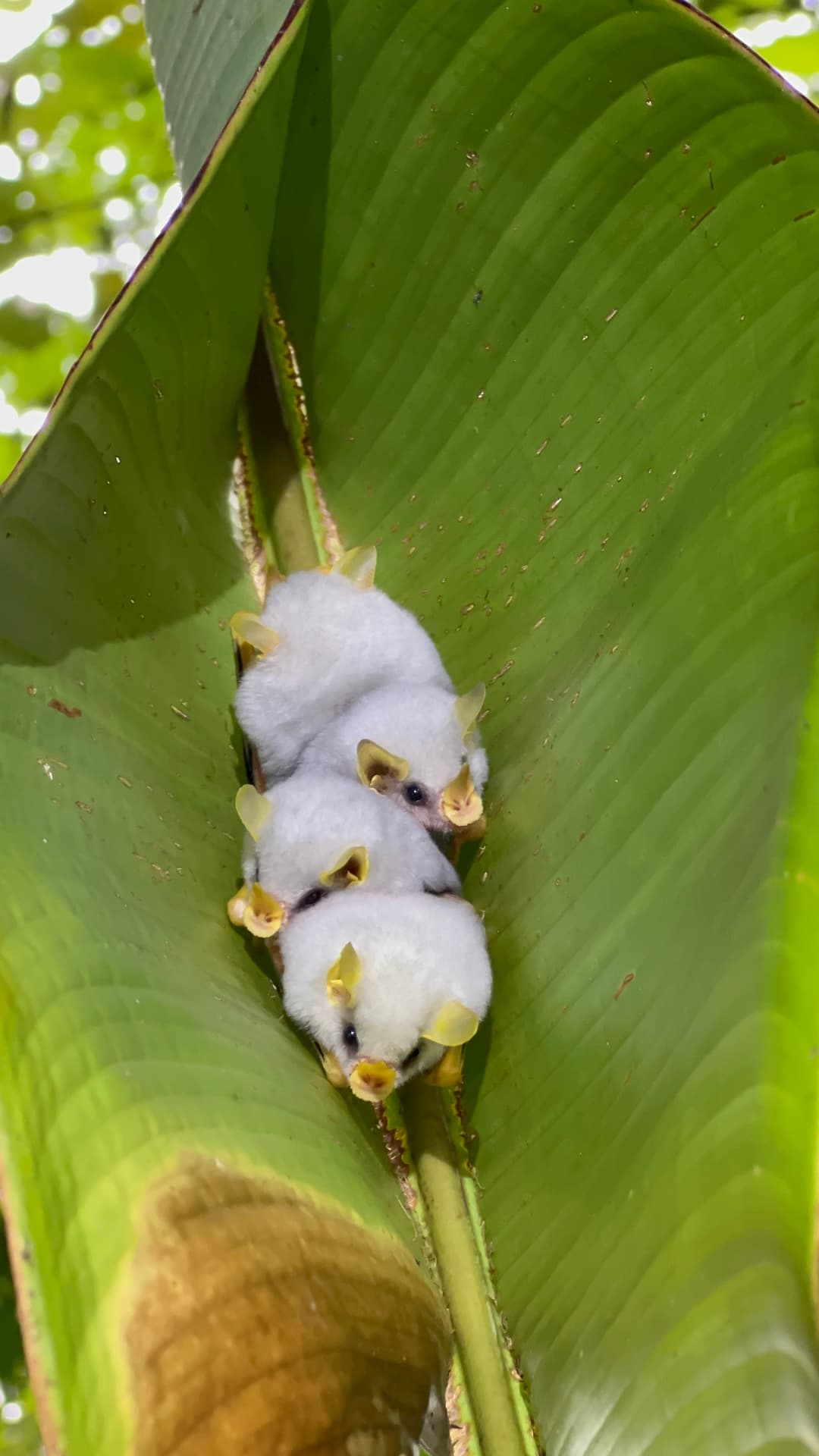
BehaviorUses large broad leaves (like heliconias) to build tents, which provide shelter and camouflage.
Groups of 5–15 bats roost together inside.
Specializes almost exclusively on figs (Ficus species).
Plays an important role in seed dispersal for fig trees, which are keystone species in tropical forests.
ReproductionSocial and roosts in small colonies.
Gestation: ~3–4 months, usually 1 young per litter.
Mothers carry and nurse young inside tents until they can fly.
🧬 SpecificationLatin name: Ectophylla alba
Family: Phyllostomidae
Size: 3.5–5 cm
Wingspan: ~10 cm
Weight: 5–6 g
Lifespan: Up to 5 years


















🎁 Fun Fact:
The Honduran White Bat is one of only six bat species in the world that build their own shelters (tents). Their white fur reflects green light from leaves, making them appear invisible when roosting under foliage.
⚠️ Advice:
- Look for them in lowland rainforests, especially in areas with abundant heliconia and banana plants—they build their "tents" on their leaves.
- The best time to look is during the day, when they sleep inside their green "houses."
- To spot them, look for folded-down leaves with neat cuts along the veins—these are their shelters.
- Approach very quietly: bats are shy and may fly away.
- Use binoculars or a zoom camera—this way you can see their snow-white fur and orange ears without disturbing them.