







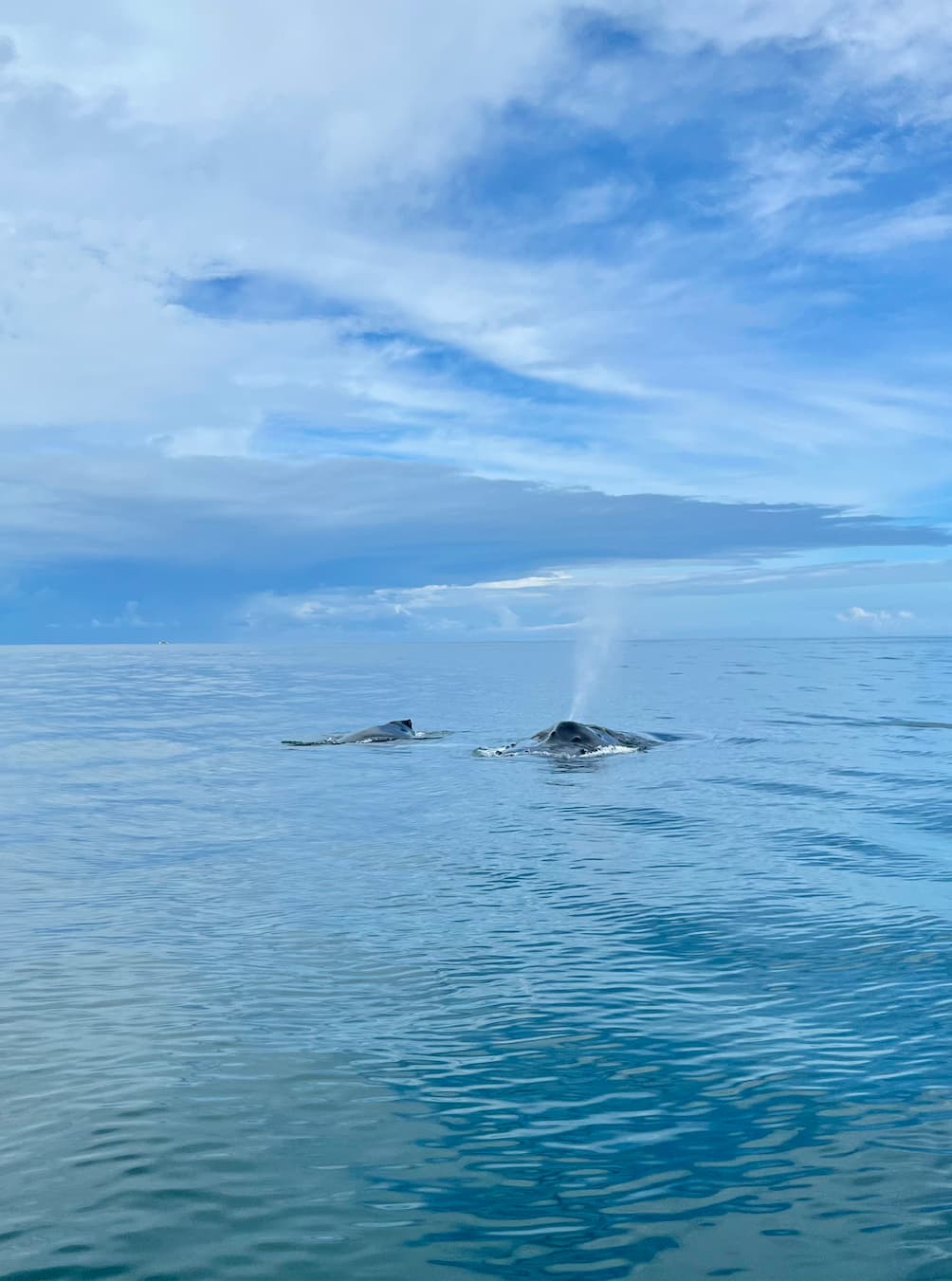
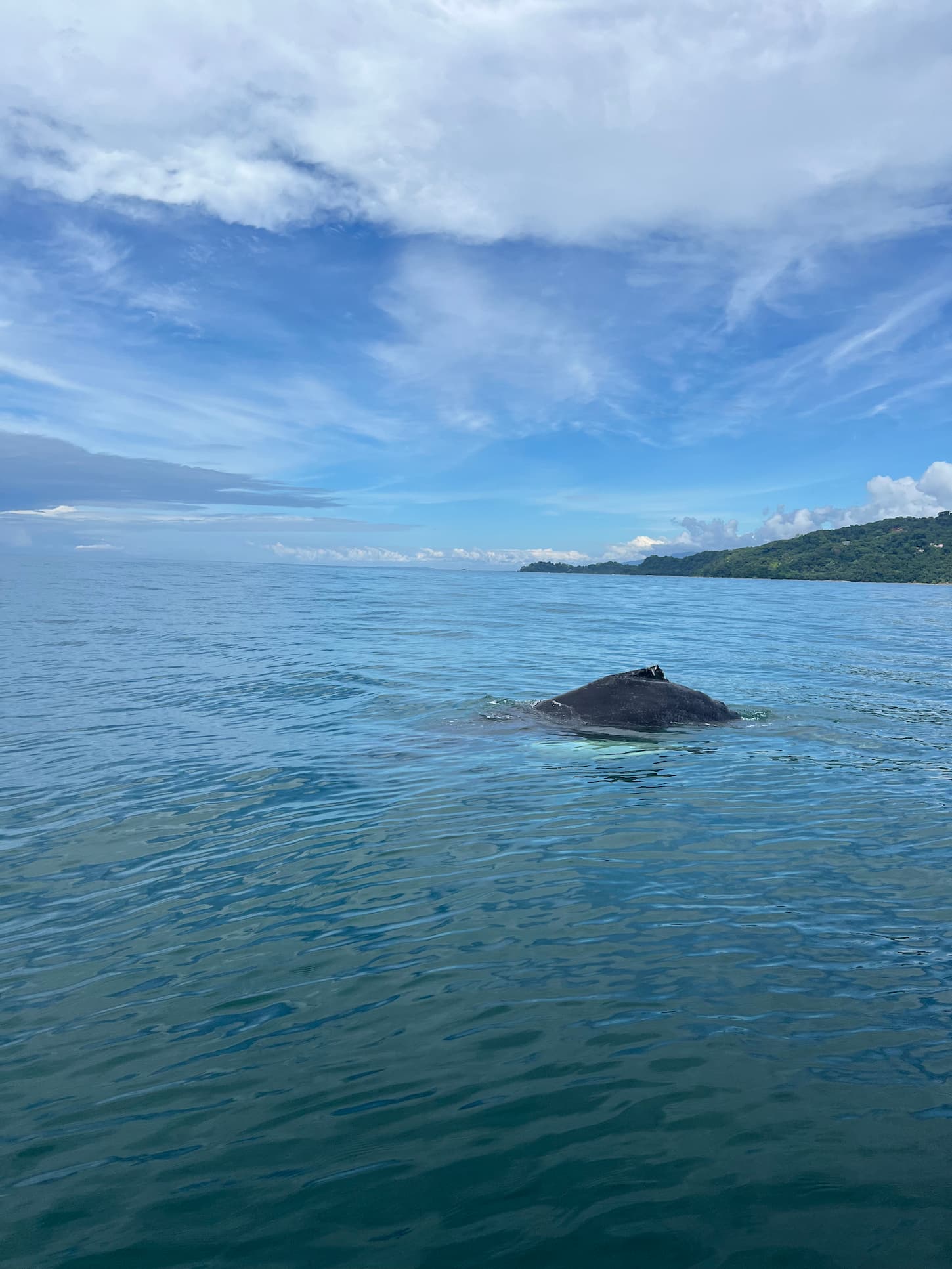
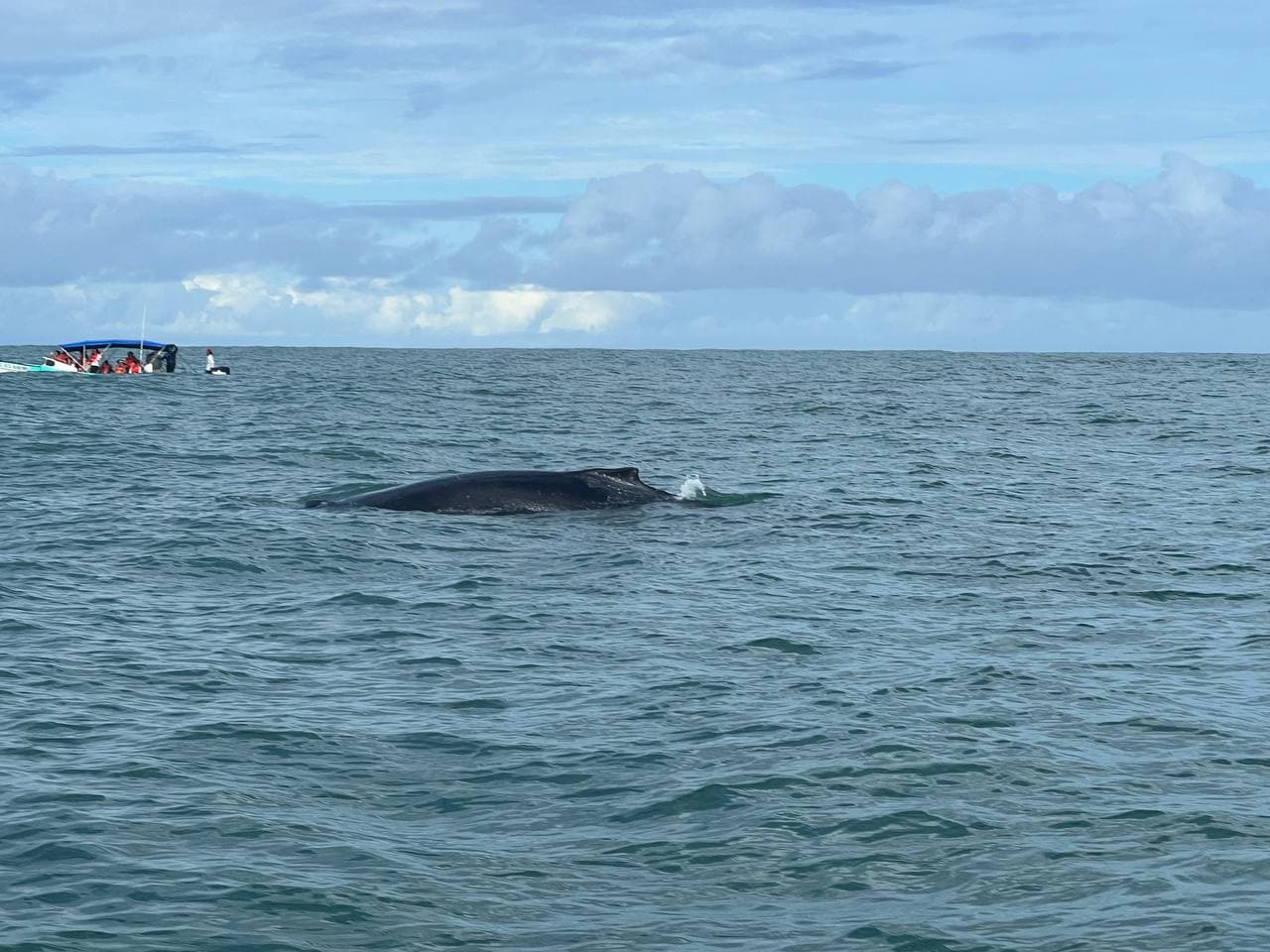
The Humpback Whale (Megaptera novaeangliae) is a massive yet graceful marine mammal famous for its songs and acrobatic breaches. In Costa Rica, it is a seasonal visitor, arriving to warm waters to breed and give birth.
RangeOne of the longest migrations of any mammal, traveling up to 8,000 km one way between feeding and breeding areas.
This makes Costa Rica one of the few places in the world where humpback whales can be seen almost year-round.
BehaviorMostly solitary or in small groups.
Diet: Krill, Small schooling fish (anchovies, sardines, herring)
Humpback whales use bubble-net feeding, a cooperative hunting technique where whales blow bubbles to trap fish.
ReproductionFamous for complex songs sung by males during breeding season. Gestation: ~11–12 months. Calves are born in warm waters and stay with the mother for about 1 year. Strong maternal care; calves drink up to 600 liters of milk per day
🧬 SpecificationLatin name: Megaptera novaeangliae
Family: Balaenopteridae (rorqual whales)
Size: 12–16 m
Weight: 25–40 metric tons
Lifespan: 45–60 years
Intelligence: Highly intelligent


















🎁 Fun Fact:
Each humpback whale has a unique song, and entire populations can gradually change their songs together — like a shared cultural trend across the ocean.
The black-and-white patterns on a humpback whale’s tail flukes are unique to each individual, allowing scientists to identify whales like fingerprints.
Excellent long-term memory and navigation skills
⚠️ Advice:
The best time to see humpback whales in Costa Rica is July–October and December–March.
Look for them breaching, tail-slapping, or blowing misty spouts near the surface — especially around Marino Ballena National Park.