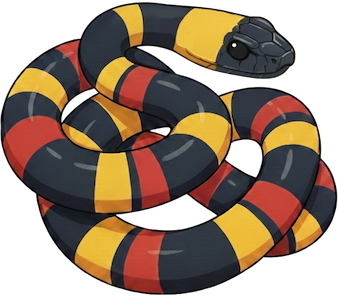




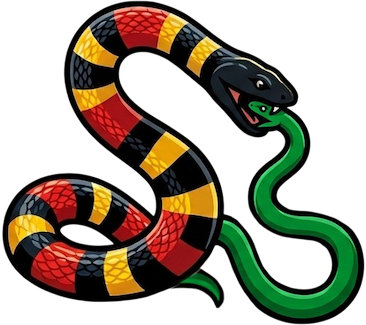
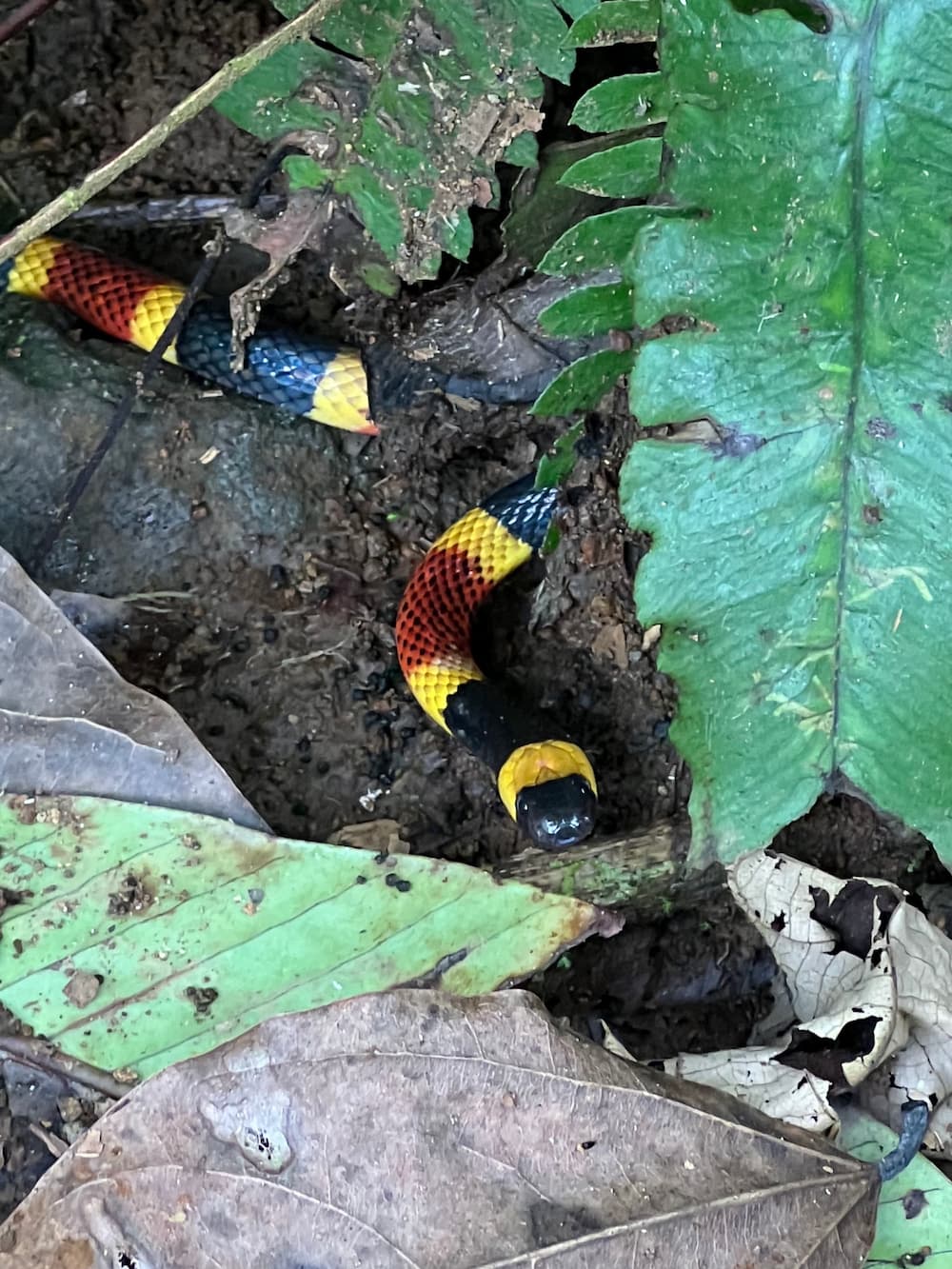
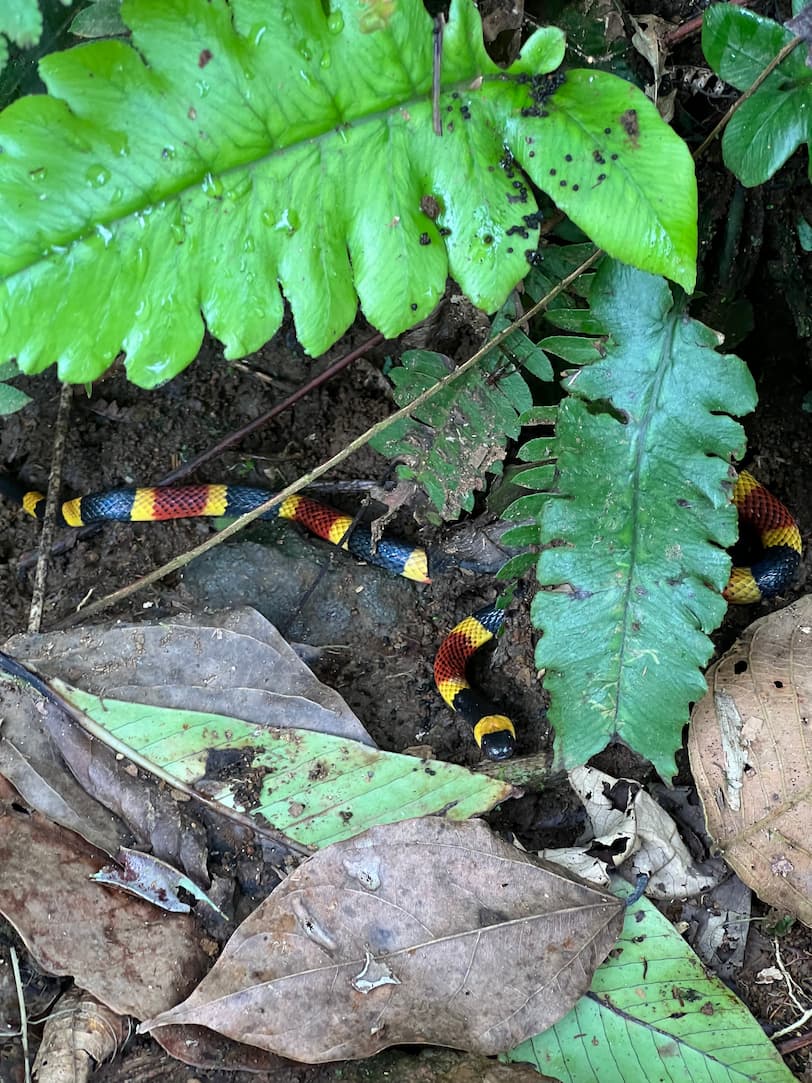
The Micrurus mosquitensis, known as the Mosquitia Coral Snake is a unique, highly venomous lowland coral snake of Central America. This brightly colored coral snake belonging to the elapid family, the same group as cobras and mambas. Like other coral snakes, it possesses fixed front fangs and a potent neurotoxic venom. Despite this, it is generally secretive and rarely encountered.
Its rarity, secretive behavior, and specialized snake-eating diet make it one of the more ecologically unique elapids in the region.
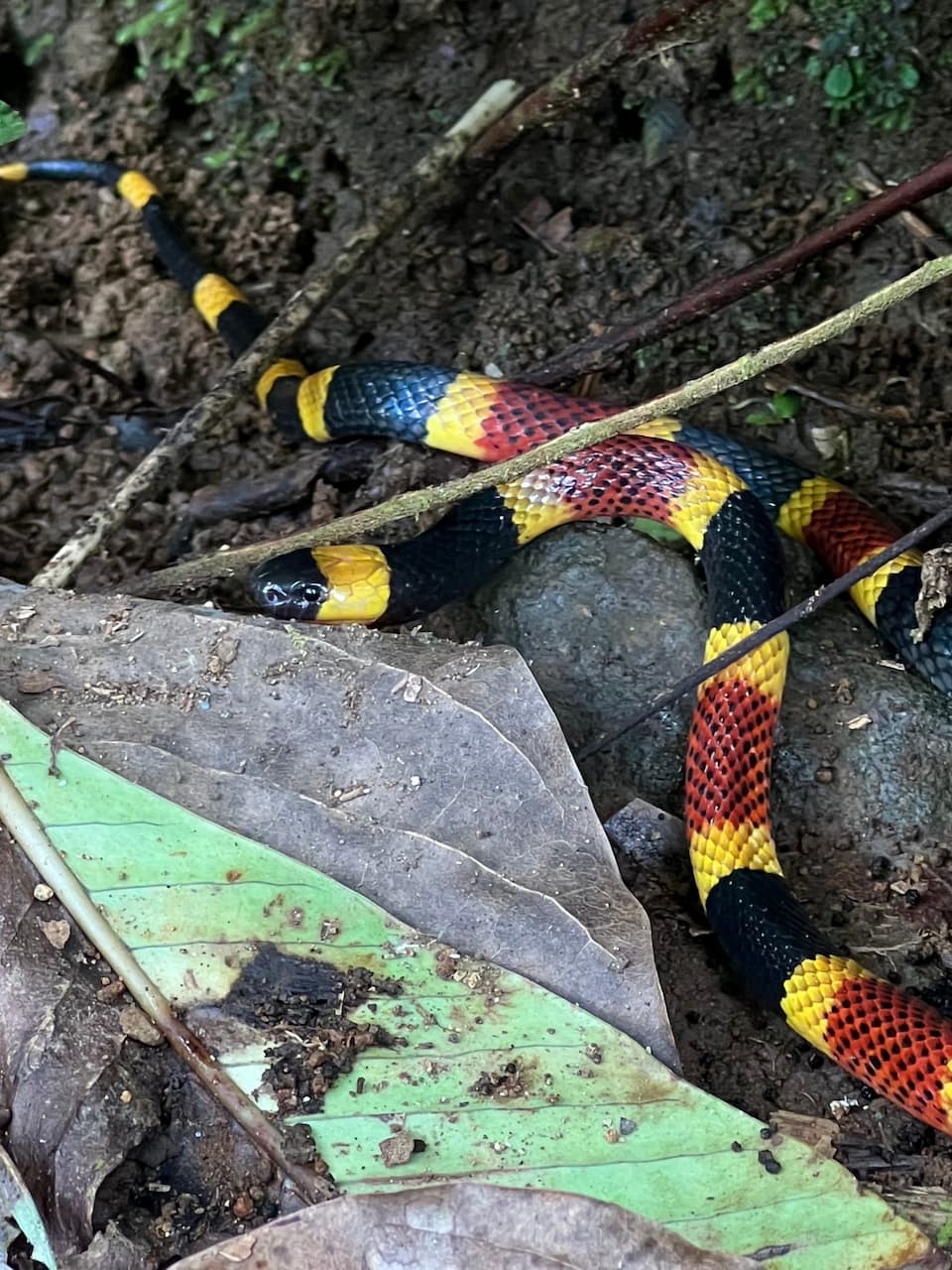
RangeThis species occurs in parts of Central America, including eastern Honduras, Nicaragua, and northern Costa Rica, particularly in Caribbean lowland regions. Its distribution is associated with humid tropical environments. It is often fossorial or semi-fossorial, spending much of its time hidden under leaf litter, logs, or loose soil.
🌙 Behavior
This coral snake is shy and non-aggressive, relying on its warning coloration rather than confrontation.
A unique ecological trait of it is that it is ophiophagous—it specializes in feeding on other snakes, including small venomous and non-venomous species, as well as lizards.
ReproductionLike other coral snakes, it is oviparous (egg-laying).
Females lay small clutches of eggs in concealed, humid locations.
Hatchlings are fully venomous at birth.
🧬 Specification Latin name: Micrurus mosquitensis
Family: Elapidae
Size: 50–80 cm
Weight: 70–150 g
Lifespan: 7–12 years













⚠️ Venom:
From a toxicological perspective, this is one of the most dangerous snakes in the country. Coral snakes belong to the elapid family, like cobras, mambas, and sea snakes.
Its venom is a powerful neurotoxin that attacks the nervous system and blocks neuromuscular transmission, potentially leading to respiratory muscle paralysis. Unlike the painful bite of a viper (such as Bothrops species), whose venom is hemotoxic and causes tissue destruction and swelling, coral snake venom doesn't cause horrible swelling or gangrene. Instead, it blocks signals from nerves to muscles. This is similar to the plant poison curare: the muscles simply stop responding, leading to paralysis. Although coral snakes inject relatively small amounts of venom due to their short fangs, their toxin is extremely potent.
☠️ Symptoms:
A coral snake bite is deceptive in its “silence”:
🎁 Fun Fact:
Its venom works like a biological “off switch,” blocking communication between nerves and muscles.
Bright banded coloration serves as aposematic warning, signaling toxicity to predators.
Costa Rican antivenin is so effective that it is exported to many countries in Latin America and Africa.
🏥 Is There Antivenom?
Costa Rica is a global leader in antivenom production. The renowned Instituto Clodomiro Picado produces high-quality antivenoms. There is a specific Suero Anticoral (coral antivenom) effective against most Micrurus species, including M. mosquitensis. This antivenom is widely available in public hospitals and many Red Cross (Cruz Roja) stations in regions where these snakes occur.
🚑 What To Do In Case of a Bite
Do not panic. Neurotoxins do not act instantly — you have time to reach medical care.
Immobilize the affected limb to slow lymphatic spread of venom.
Go immediately to the nearest public hospital (CCSS / Caja) or medical center, even if the bite appears “dry.”
Do NOT cut, suck, burn, or apply a tourniquet. These measures worsen tissue damage and do not remove venom.
⚠️Advice:
- Be careful in humid Caribbean lowland rainforest, especially in northeastern Costa Rica.
- Never walk through or reach into leaf litter, fallen logs, or forest debris without proper protection; this species is semi-fossorial and remains hidden beneath the surface, making them rarely exposed.
- Be especially alert following heavy rain, as these conditions often drive these venomous snakes from their burrows toward the surface.
- Avoid tall grass and leaf piles at forest edges and in secondary growth, as these areas are high-activity zones for the species.
- Move slowly and scan the ground carefully — this snake relies on camouflage and stillness rather than escape.
✍️Safety Tips:
- Do not attempt to handle or identify coral snakes by color pattern alone even juveniles are fully venomous.
- Wear boots in humid Caribbean lowland forests.
- In case of a bite, seek immediate hospital care—do not wait for symptoms.