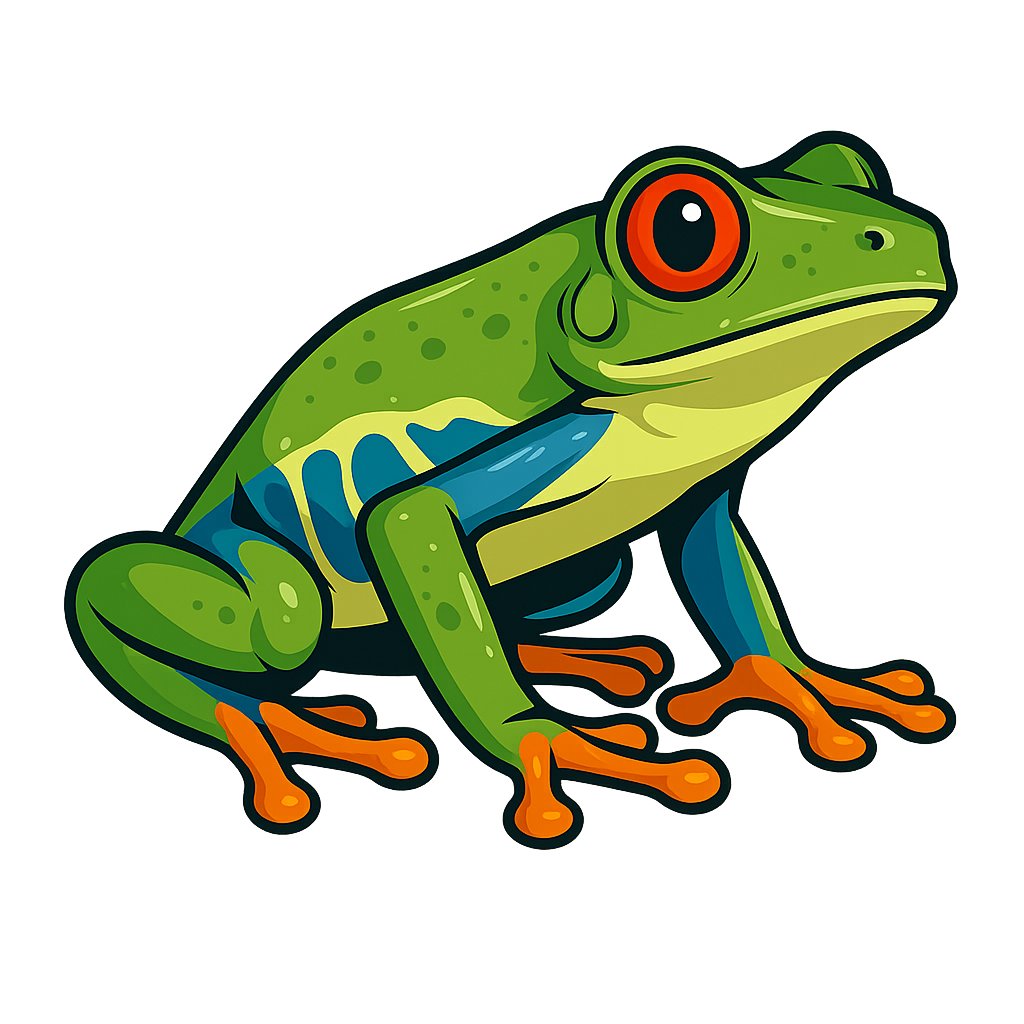







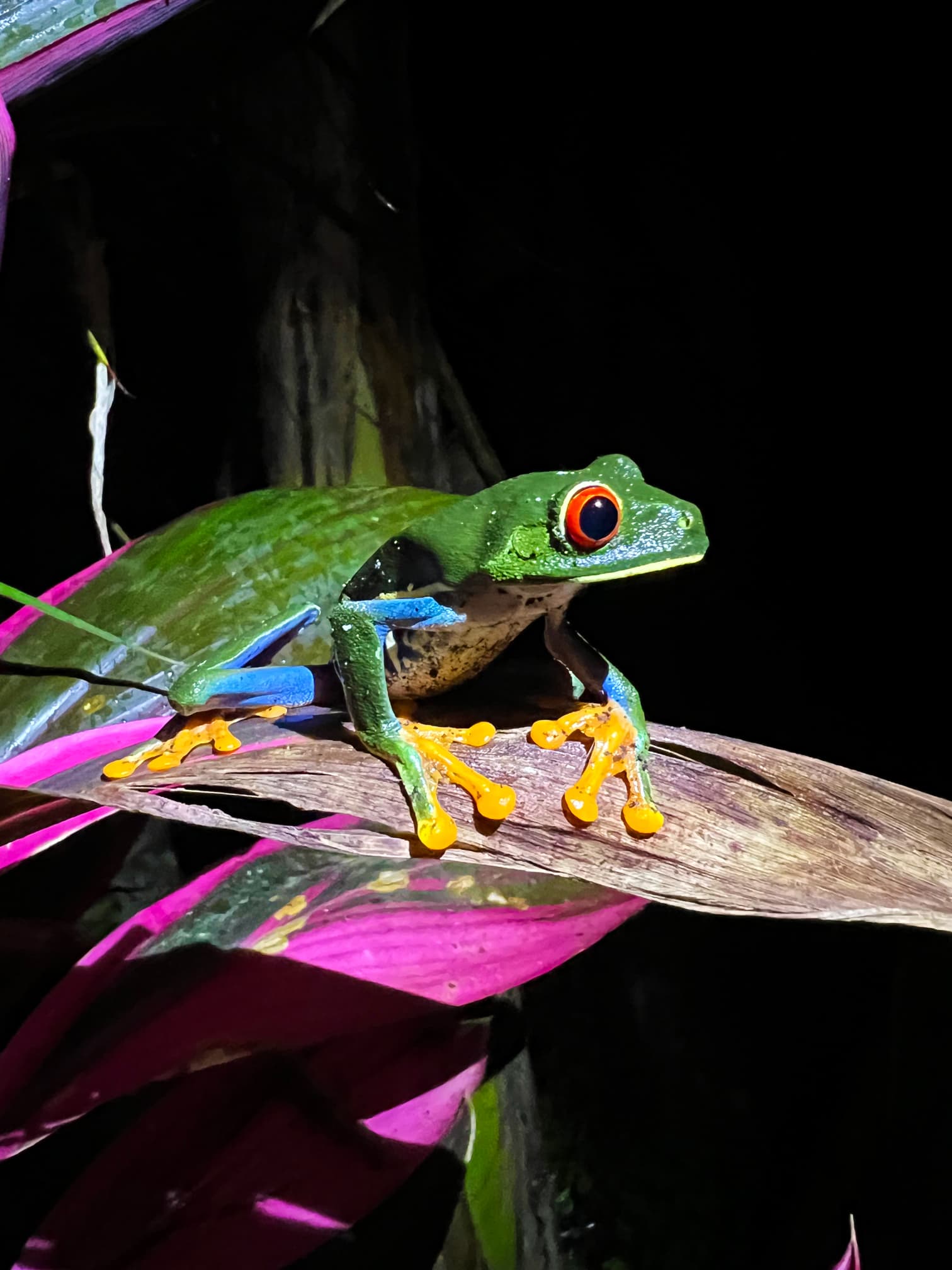
The Red-eyed Tree Frog (Agalychnis callidryas) is one of the most iconic amphibians of Central America. With its vivid green body, striking red eyes, and orange toes, it has become a living symbol of the rainforest.
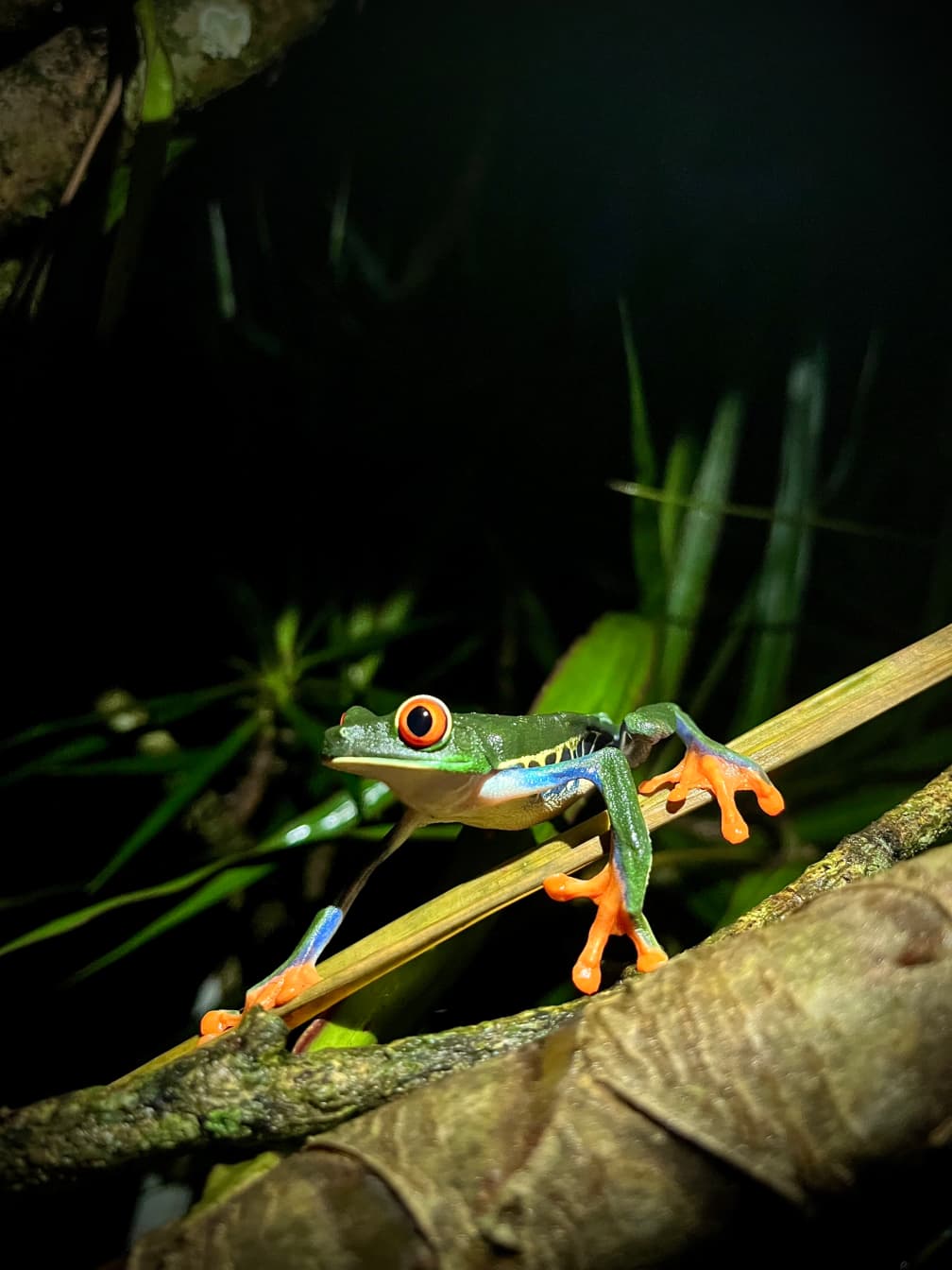
RangeRed-eyed Tree Frog can be found throughout Central America from southern Mexico through Costa Rica to northern Colombia. These frogs live in lowland tropical rainforests, especially close to rivers, ponds, and wetlands where they breed.
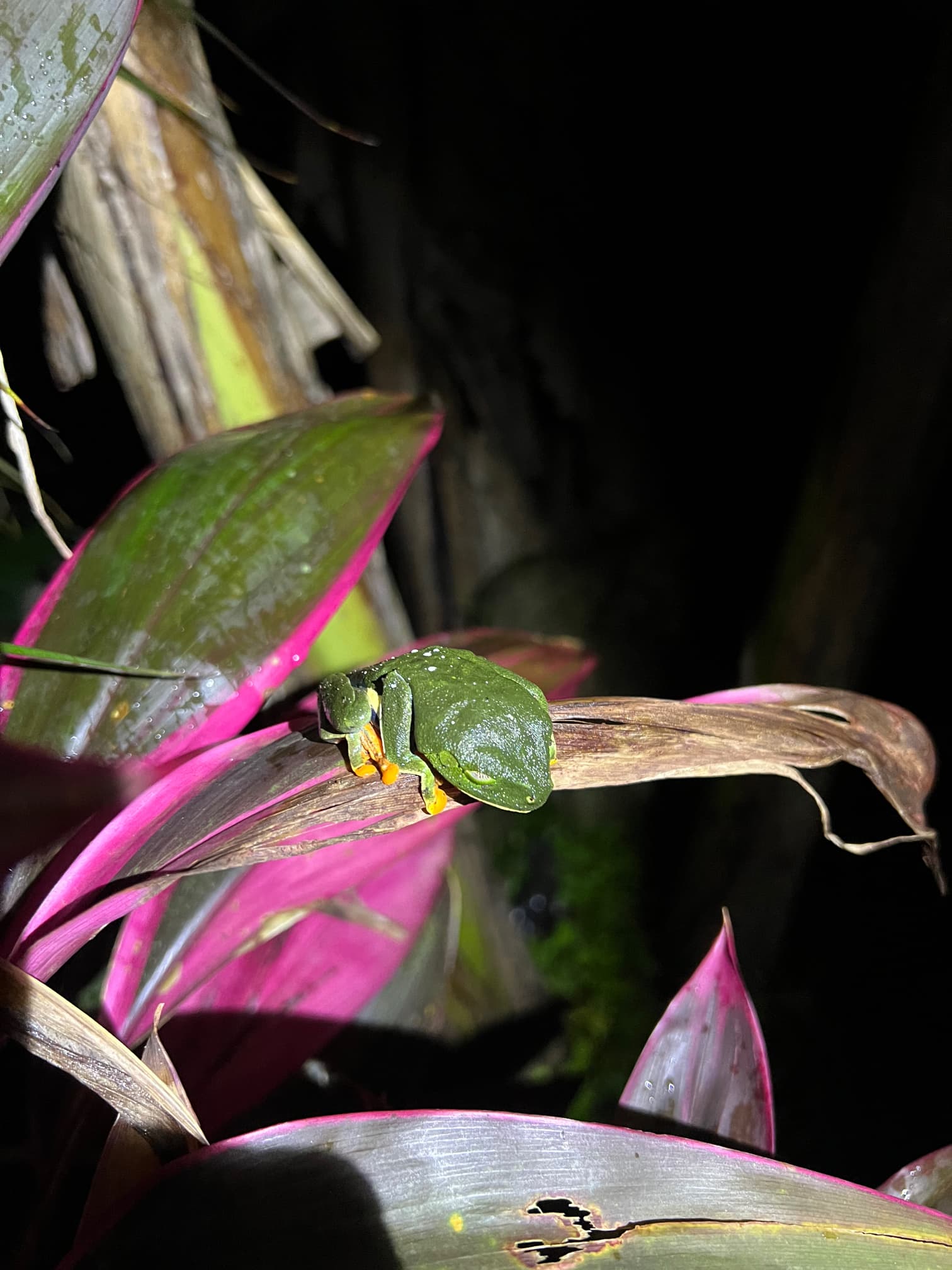
BehaviorNocturnal — hide under leaves during the day, active at night. Red-eyed Tree Frogs are insectivores. They mainly eat: crickets, moths, grasshoppers, flies, other small insects and invertebrates.
They are excellent ambush predators, sitting still on leaves and then leaping to catch prey with their sticky tongues.
ReproductionBreeding season occurs during the rainy season. Females lay clusters of eggs on leaves overhanging water. Once tadpoles hatch, they fall into the water below to continue development. If disturbed, eggs can hatch early — an incredible survival adaptation.
PoisonRed-eyed Tree Frogs are non-toxic even though touching it may cause skin irritation.
Specification 🐸Latin name: Agalychnis callidryas
Family: Phyllomedusidae
Size: 4–7 cm
Weight: ~6–15 grams
Lifespan: 5 years
Coloration: Bright green body, red eyes, blue and yellow stripes on the sides, orange toes


















🎁 Fun Fact:
The Red-eyed Tree Frog’s famous eyes are not just for beauty. Their “startle display” is a defense mechanism: when the frog opens its bulging red eyes suddenly, it shocks predators long enough to make a quick escape. This trick is called “deimatic behavior.”
⚠️ Advice:
If you’re lucky to see a Red-eyed Tree Frog on a night tour in Costa Rica:
- Use a red flashlight — it doesn’t disturb their night vision.
- Avoid touching them — their skin is sensitive, and contact with human hands can be harmful if you don't know how to do this.
- Be patient — the best photos come when the frog is relaxed and shows its full colors.