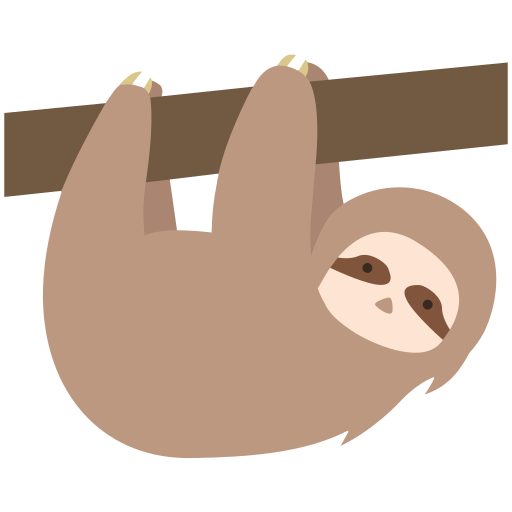







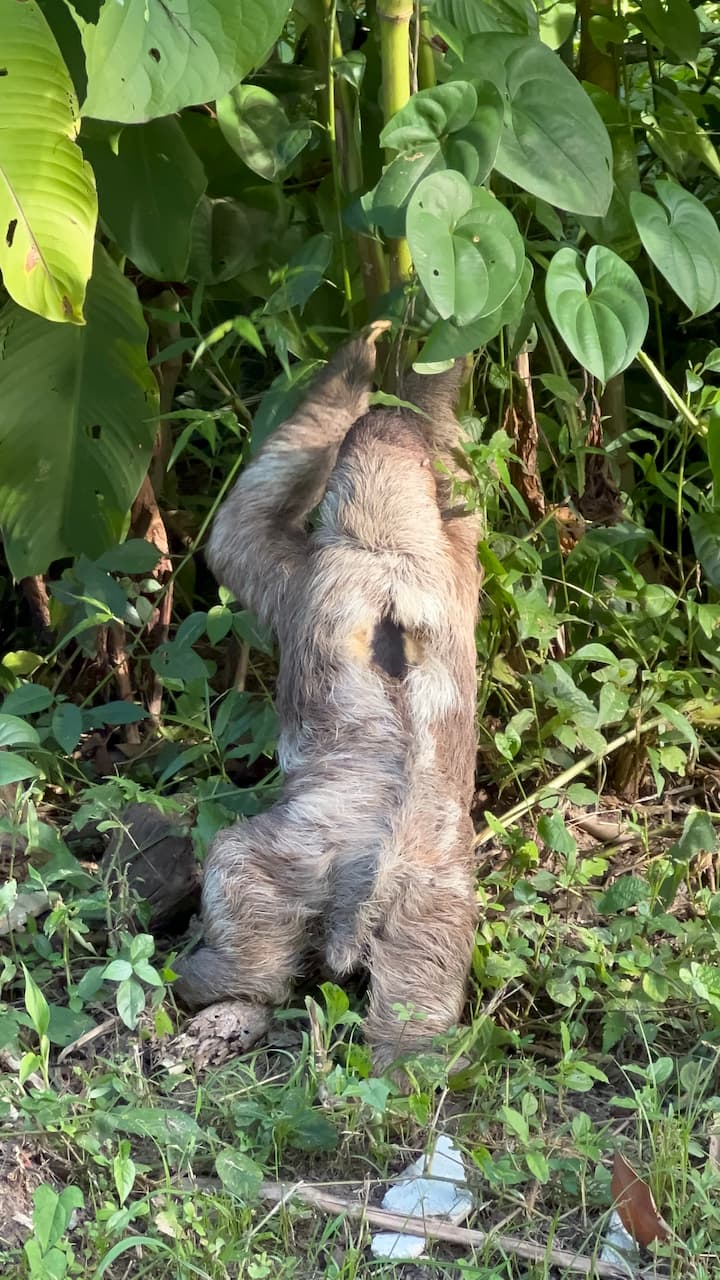
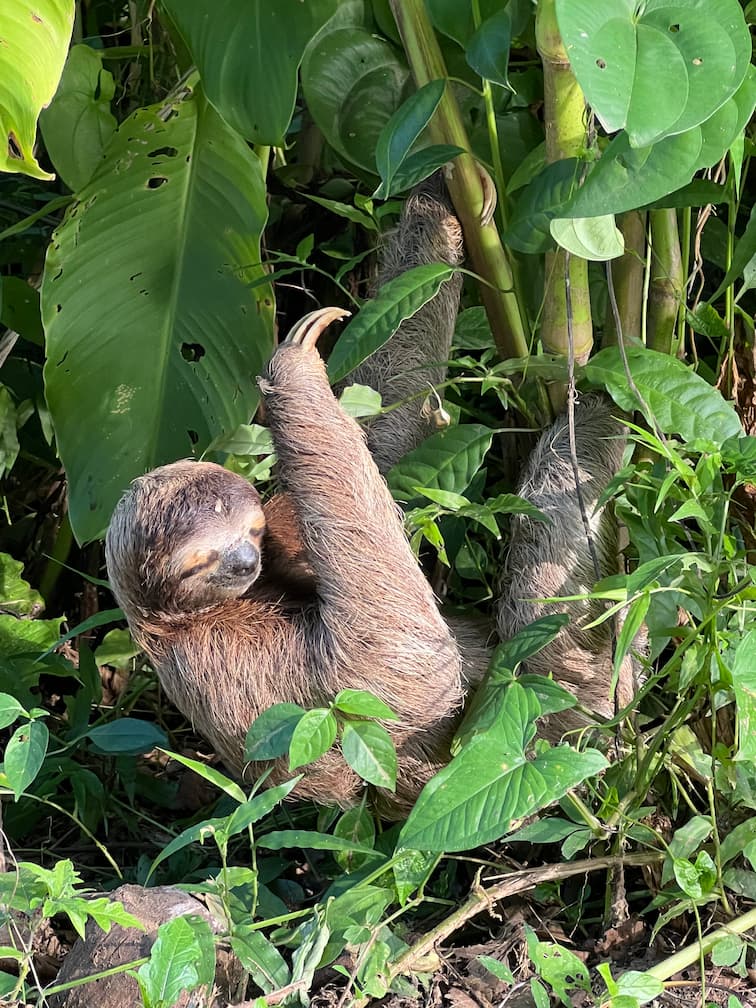
The Three-toed Sloth (Bradypus variegatus) is one of Costa Rica’s most iconic animals. Slow-moving and tree-dwelling, it survives on leaves and relies on camouflage and patience rather than speed.
.jpg)
RangeThe three-toed sloth lives across Central and South America, from Honduras and Costa Rica through Panama and into northern and central South America, including Colombia, Venezuela, Brazil, Peru, and Bolivia. Locally, in Costa Rica, it is found in lowland rainforests, secondary forests, and forest edges, from the Caribbean coast to the Pacific lowlands, wherever continuous tree cover is present.
BehaviorSolitary and extremely slow-moving. Descend to the ground about once a week to defecate.
Diet includes: Leaves (main food source), young shoots and buds, occasionally flowers
Their slow metabolism allows them to survive on low-energy food.
ReproductionBirth occurs in the trees, where the newborn immediately grips onto the mother’s fur with fully developed claws. The baby remains with its mother for six to twelve months, learning which leaves are safe to eat and how to move safely through the canopy.
🧬 SpecificationLatin name: Bradypus variegatus
Family: Bradypodidae
Size: 45–60 cm
Weight: 3–6 kg
Lifespan: 20–30 years
Intellegence: Low
















🎁 Fun Fact:
Sloths move so slowly that plants grow in their fur.
They can rotate their heads up to 270°.
A sloth’s digestion can take up to one month for a single meal.
Baby sloths often taste the same leaves their mothers eat to help establish the specialized gut bacteria needed to digest toxic plants, and their powerful gripping reflex is so strong that even very young individuals can hang securely for long periods.
⚠️ Advice:
Look high in the treetops, especially along forest edges and near roads.
A sloth often appears as a round, gray-green “ball” in the branches — binoculars help a lot.