








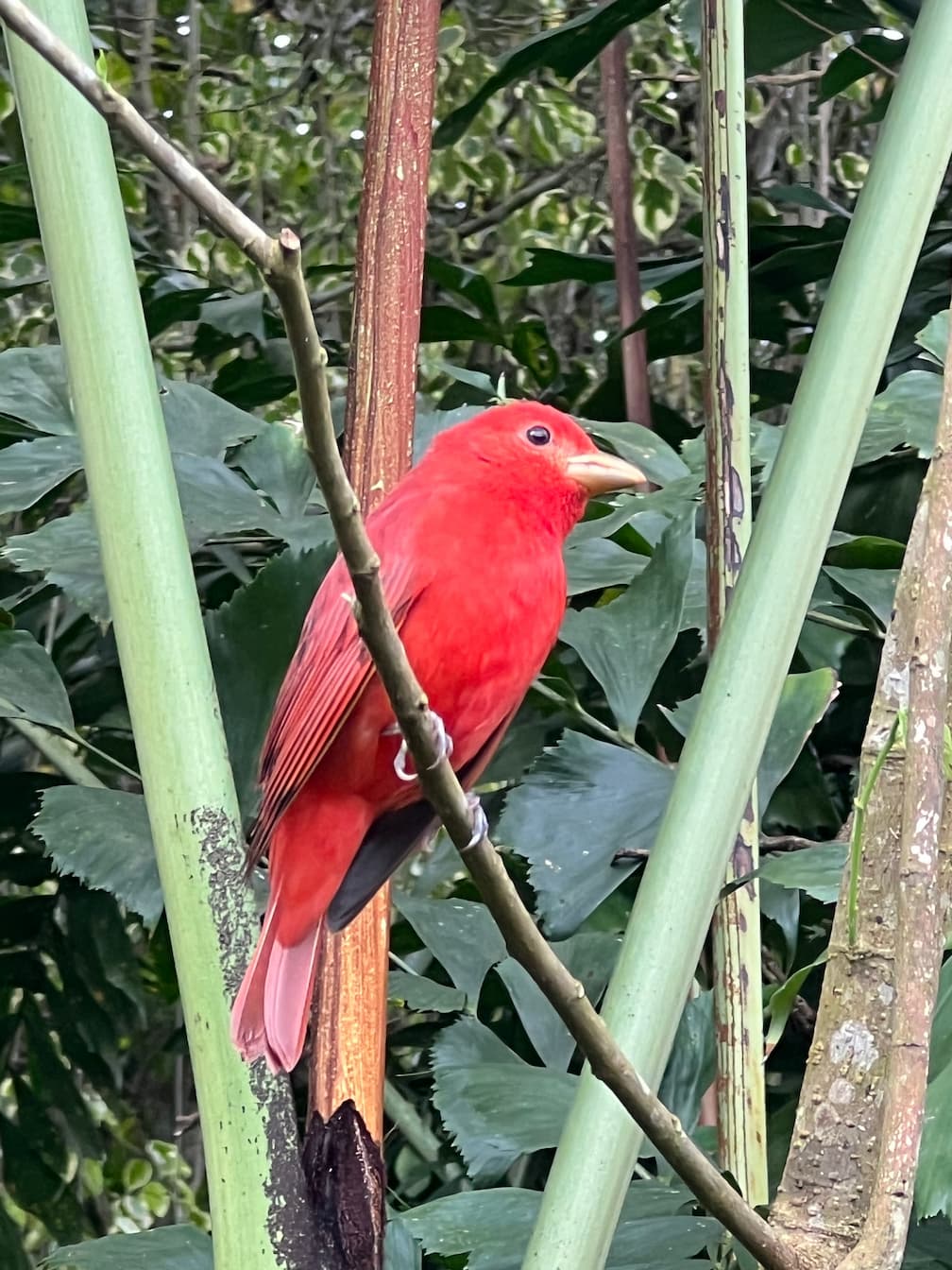
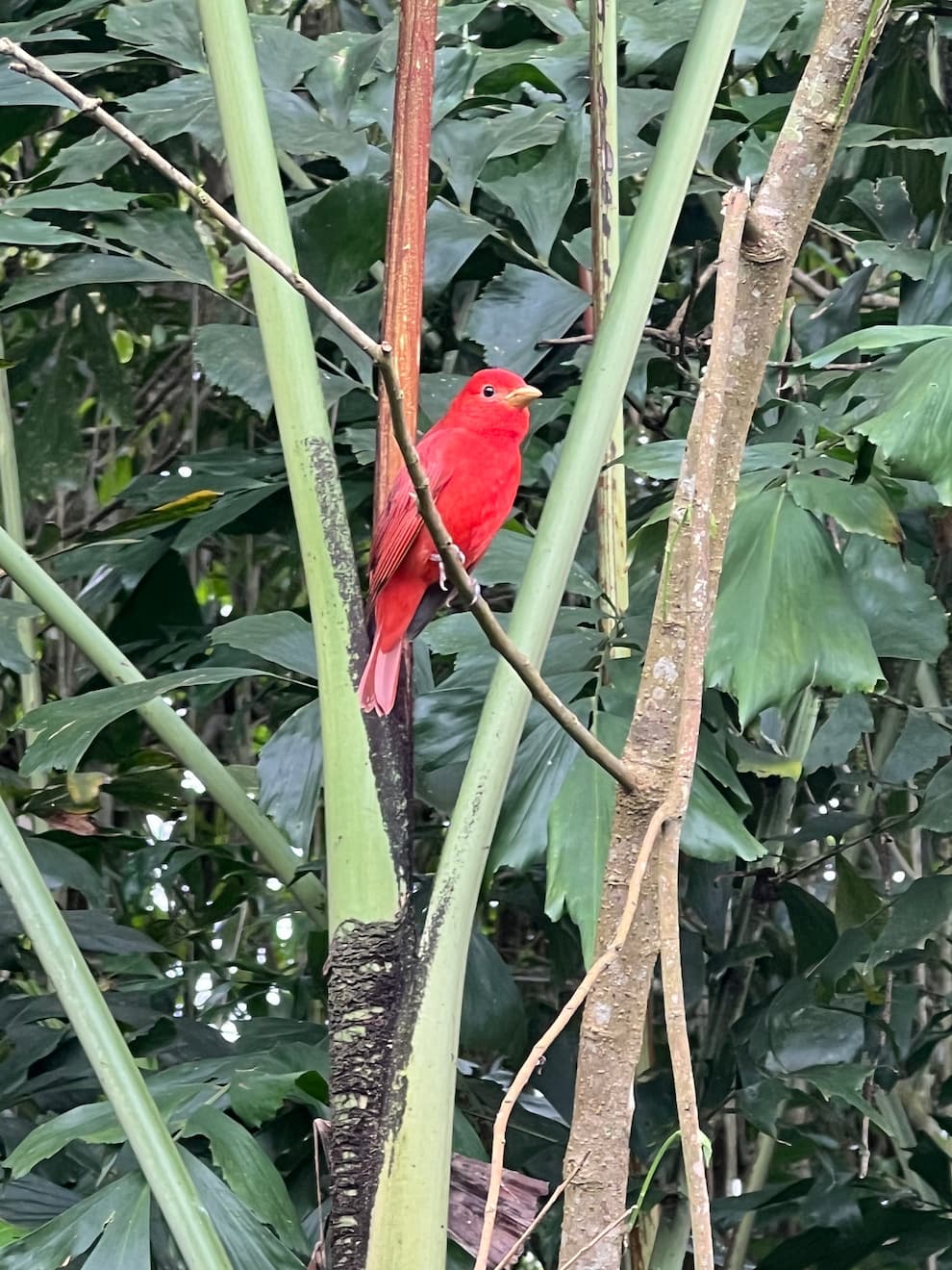
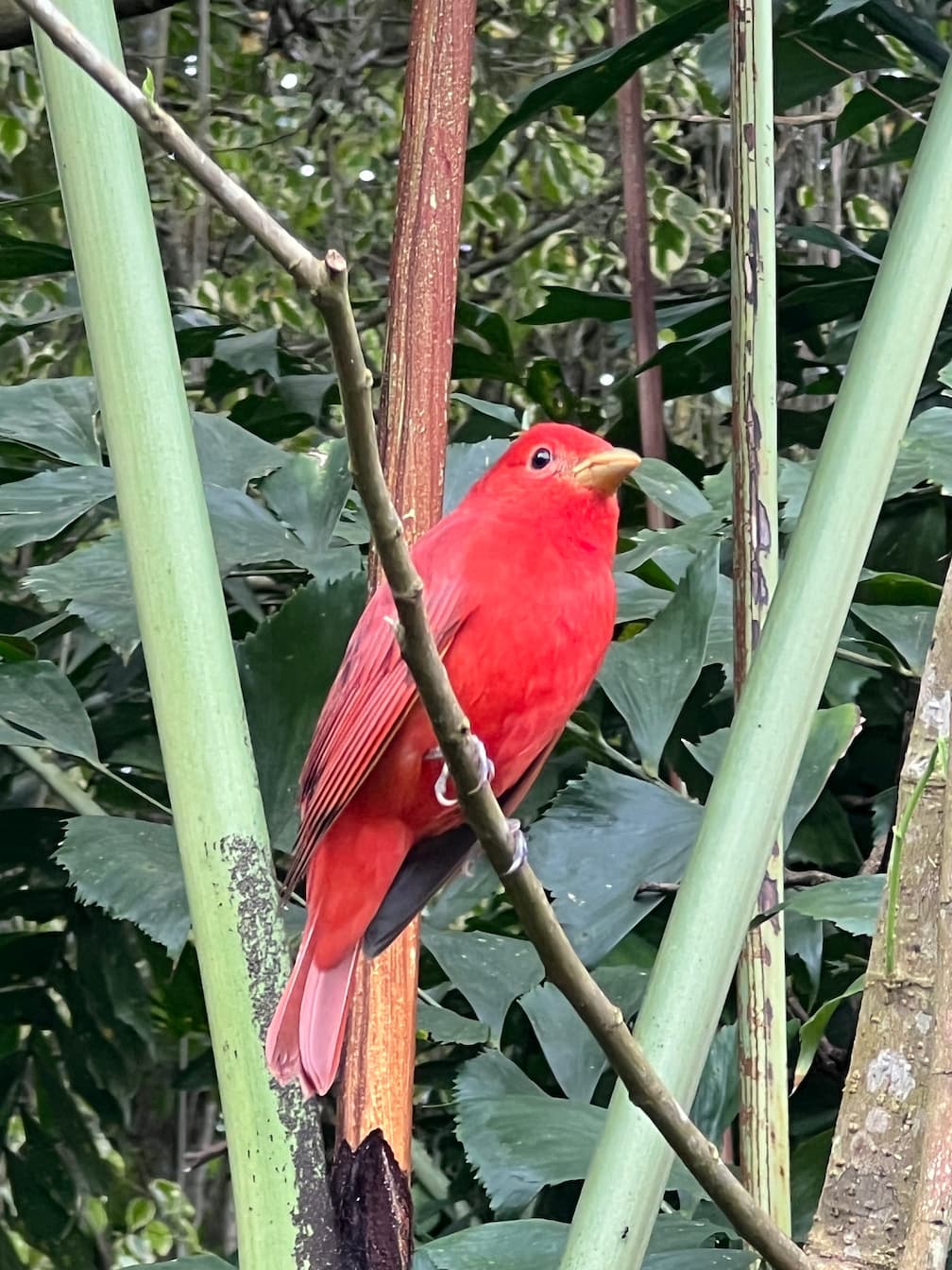
The Summer Tanager (Piranga rubra) is a brightly colored songbird known for the male’s vivid red plumage and the female’s yellow-olive coloration. It is the only completely red bird commonly found in North America. This species is often seen moving quietly through the forest canopy, where it hunts insects with precision.
RangeSummer Tanagers breed in the southern United States and migrate to Central and South America for the winter.
In Costa Rica, they are seasonal visitors, typically found during migration and the non-breeding season, especially in:
They prefer areas with a mix of trees and open space rather than dense forest.
BehaviorA quiet and deliberate forager, the Summer Tanager often moves slowly through branches, catching insects mid-air or picking them off foliage.
Primarily insectivorous, feeding on bees, wasps, beetles, and other flying insects, occasionally supplementing with fruit.
ReproductionBreeding occurs in North America, where females build small cup-shaped nests in trees and lay 3–4 eggs. Both parents participate in feeding the chicks, and the young fledge after about 10–12 days.
🧬 SpecificationLatin name: Piranga rubra
Family: Cardinalidae
Size: 16–19 cm
Weight: 25–35 g
Intellegence: Moderate 3 out of 5
Lifespan: 4-7 years


















🎁 Fun Fact:
Males are entirely red, unlike many birds with mixed coloration.
Known as a “bee specialist”, it can safely eat stinging insects. It is especially known for capturing bees and removing their stingers before eating them.
Despite bright colors, they are often hard to spot due to quiet behavior.
⚠️ Advice:
Look during migration season (especially dry season months)
Check fruiting trees and areas with insect activity
Watch mid-level canopy in forest edges and gardensListen for soft, robin-like calls
Observe quietly and from the distance to avoid scaring the bird away