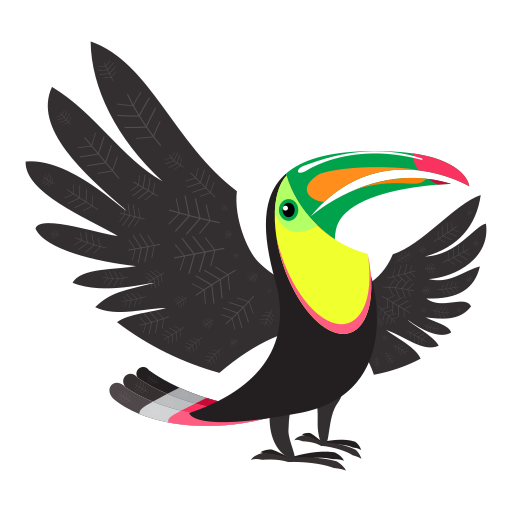









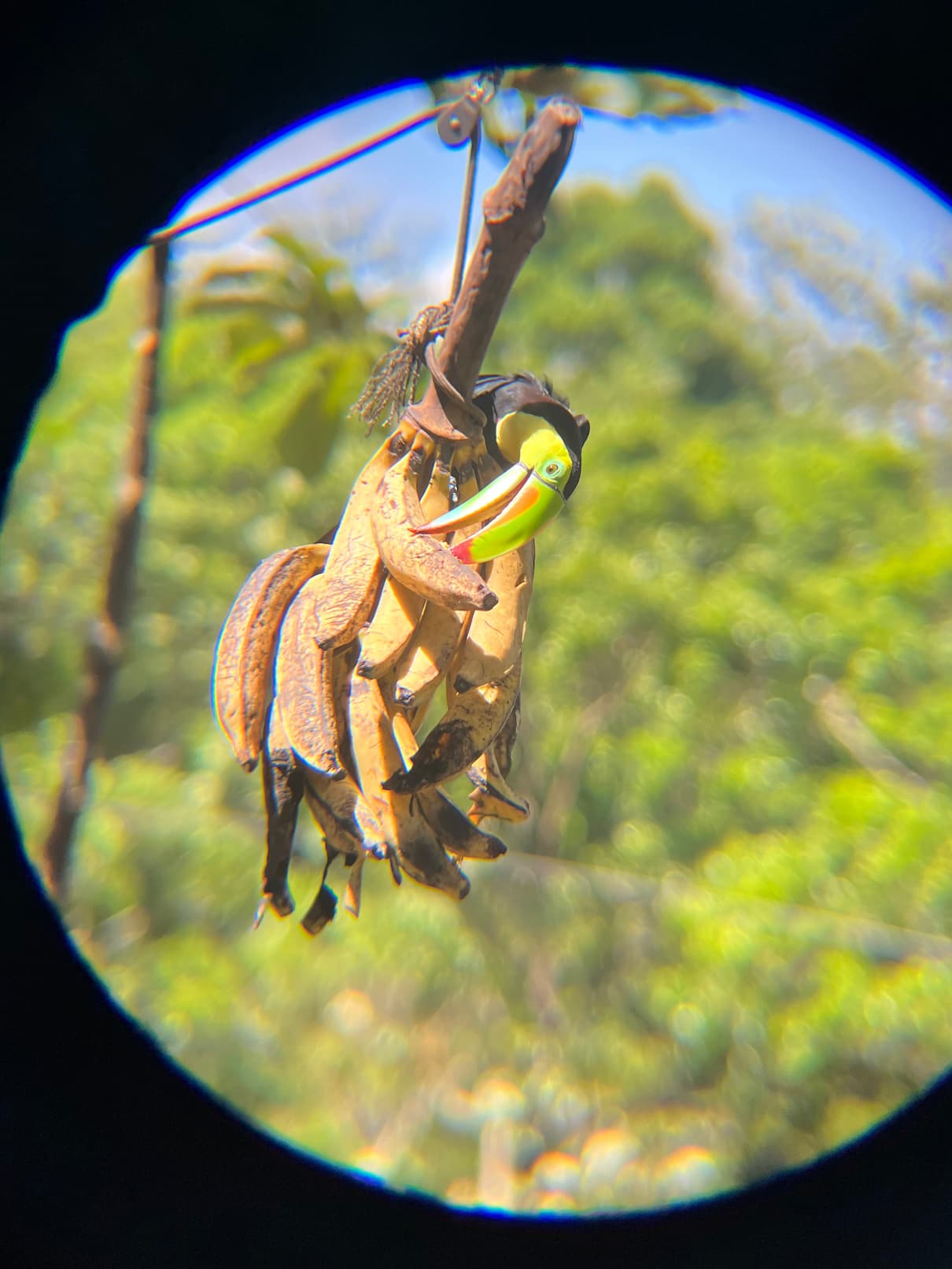
The Keel-billed Toucan is a large, colorful tropical bird known for its rainbow bill and loud calls. A canopy dweller and key seed disperser, it is an iconic symbol of Central American rainforests. This toucan plays a crucial ecological role by dispersing seeds across wide areas
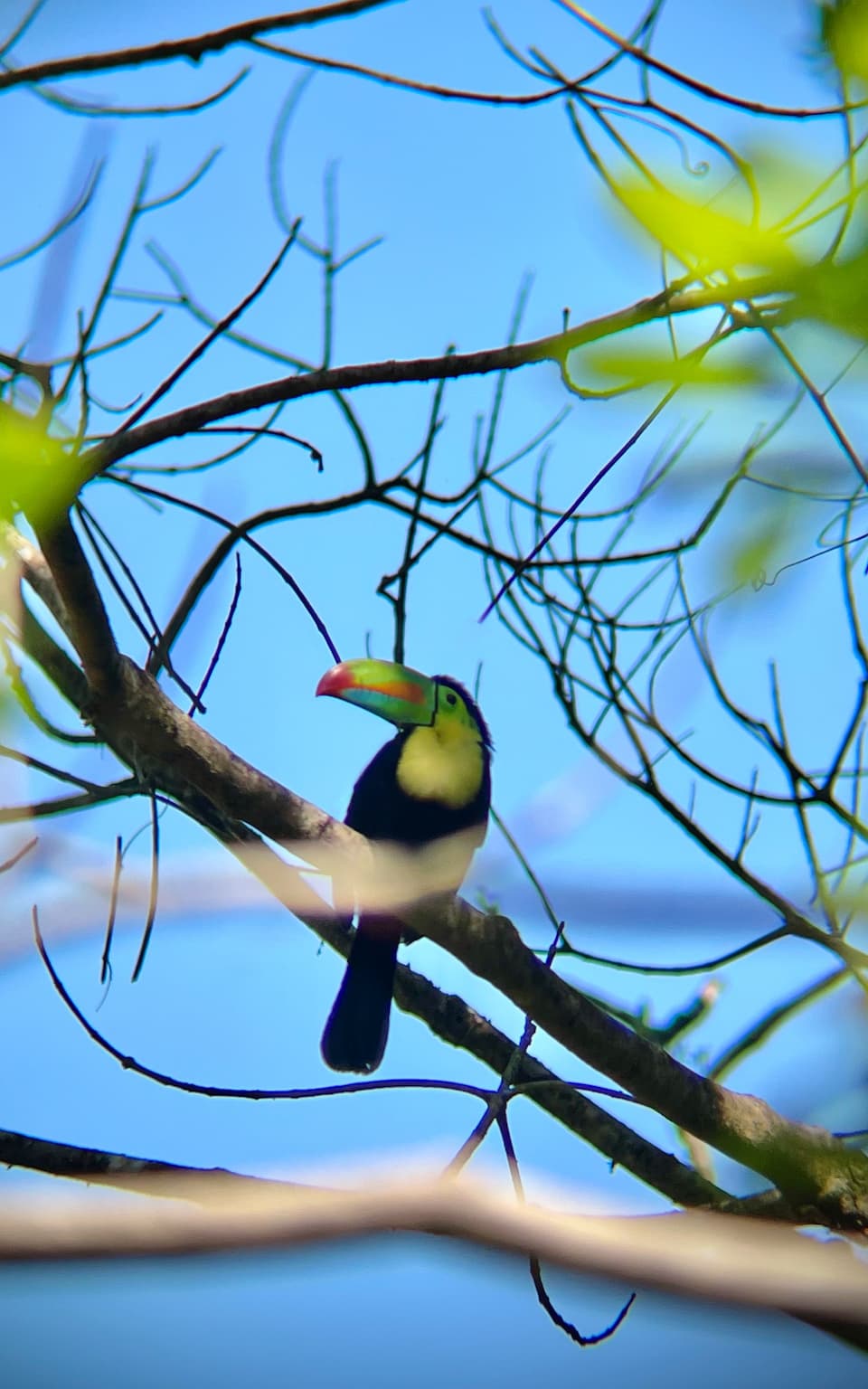
RangeThe Keel-billed Toucan (Ramphastos sulfuratus) is widely distributed across southern Mexico, Central America, and parts of northwestern South America. It inhabits a broad range of tropical environments and shows strong adaptability to different forest types. In Costa Rica, the Keel-billed Toucan is widely distributed across Caribbean and Pacific lowlands, the Northern Zone, and forested areas of Guanacaste.
It inhabits tropical rainforests, moist and semi-humid forests, forest edges, and secondary growth, mostly below 900 m elevation.
BehaviorSocial — often seen in pairs or small groups. Loud, frog-like crying calls echo through the forest canopy.
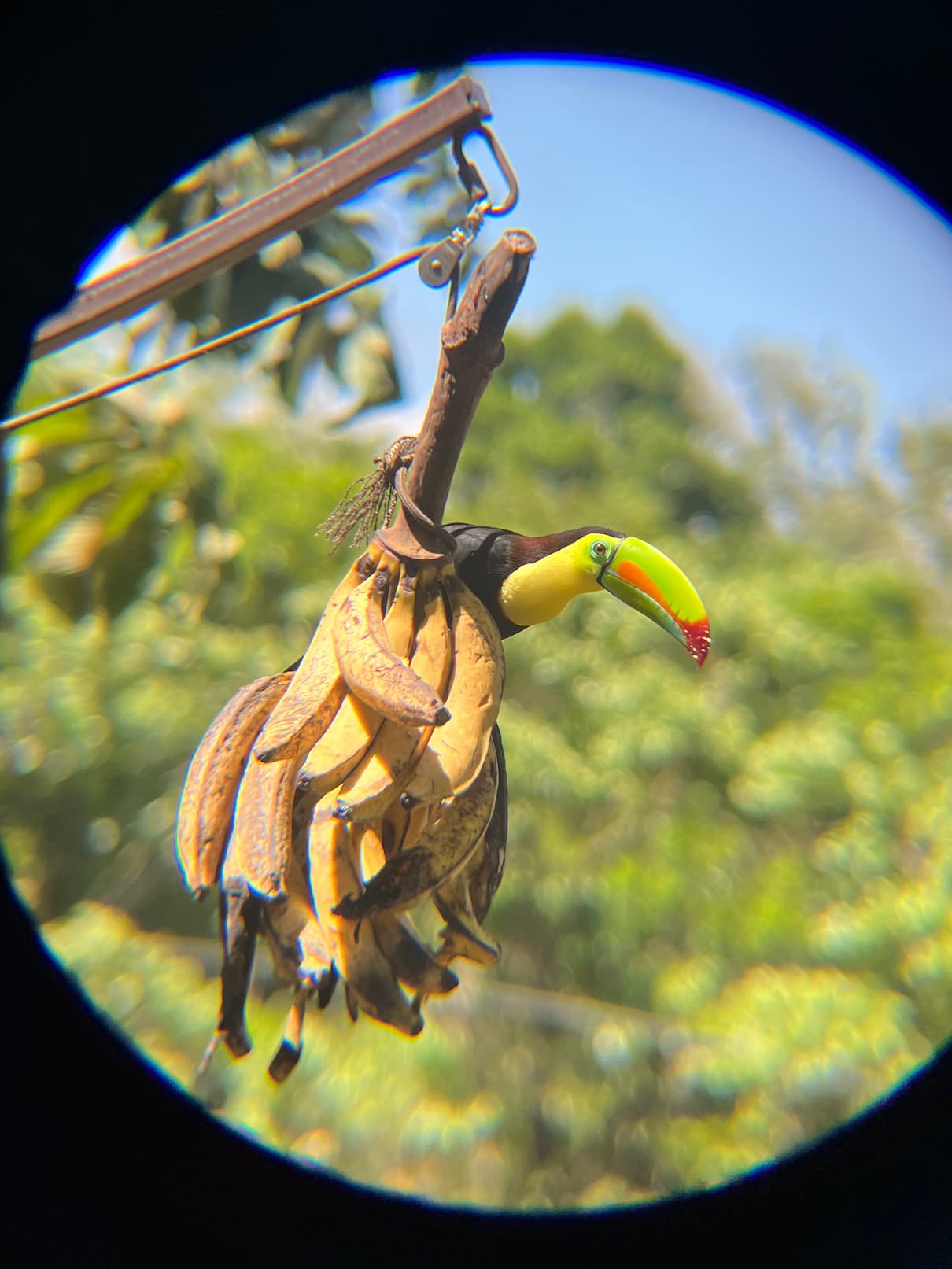
Keel-billed Toucan is an omnivore with a strongly fruit-based diet. Although it feeds primarily on fruit, it also supplements its diet with insects, small reptiles, eggs, and occasionally nestlings. This species exhibits occasional opportunistic predation behavior.
Reproduction
🧬 Specification Common name: Keel-billed Toucan
Alternative name: Rainbow-billed Toucan
Latin name: Ramphastos sulfuratus
Family: Ramphastidae
Size: 42–55 cm
Weight: ~380–500 g
Intelligence: Medium
Lifespan: 15–20 years


















🎁 Fun Fact:
The Keel-billed Toucan is the national bird of Belize. Its massive bill helps with thermoregulation, releasing excess body heat. Despite its colorful look, it can be surprisingly hard to spot when motionless in the canopy. Toucans often sleep folded forward, tucking their bill under their wings to conserve space.
⚠️ Advice:
Listen first 👂 — their calls often reveal their presence long before you see them. Scan high branches and fruiting trees in early morning hours.