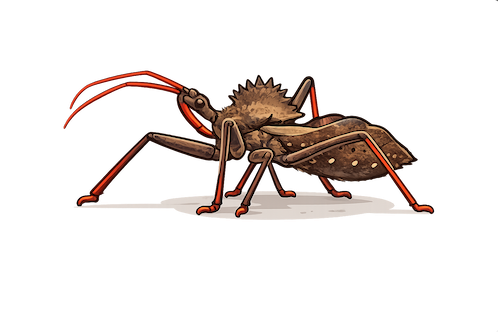








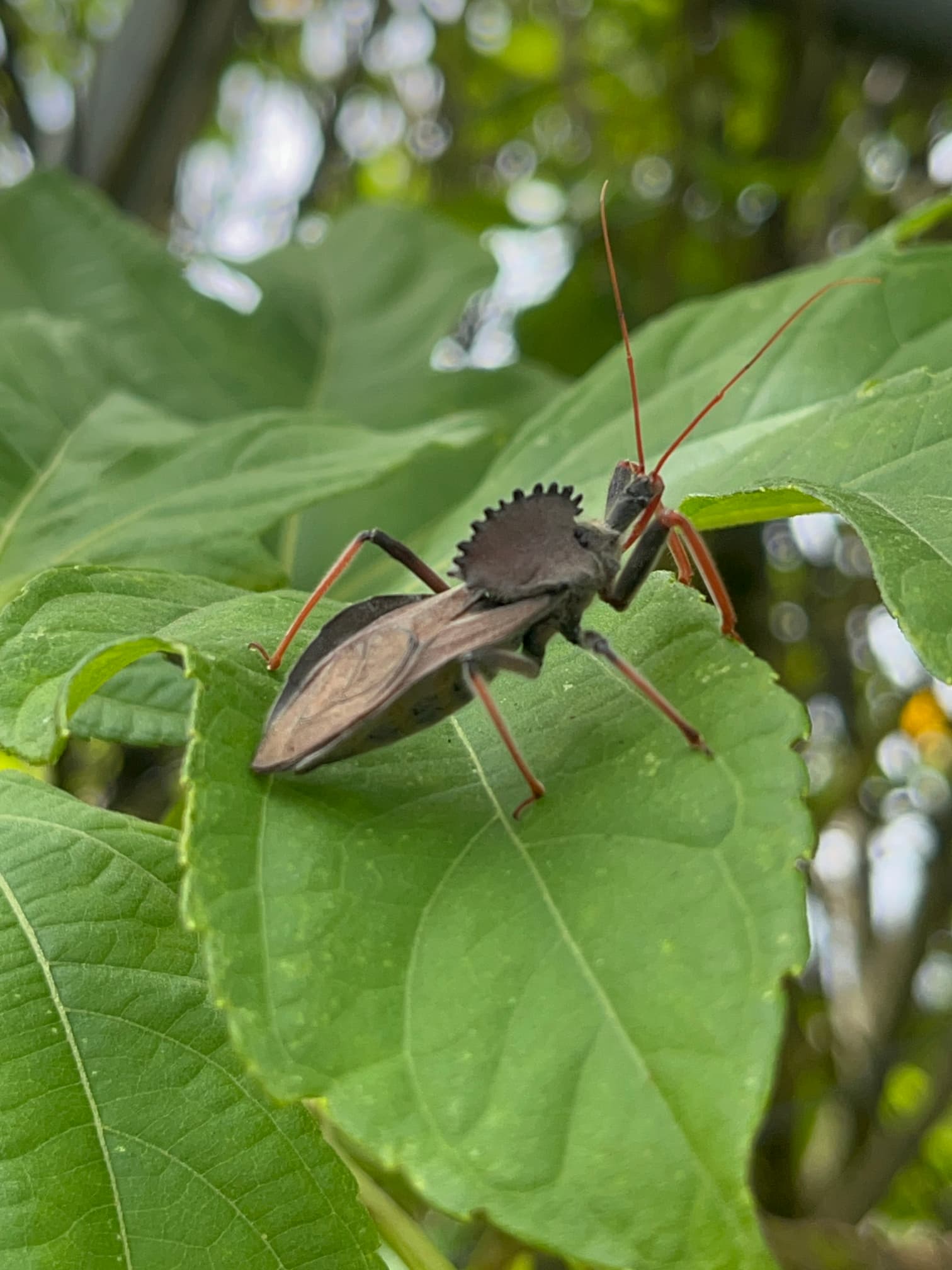
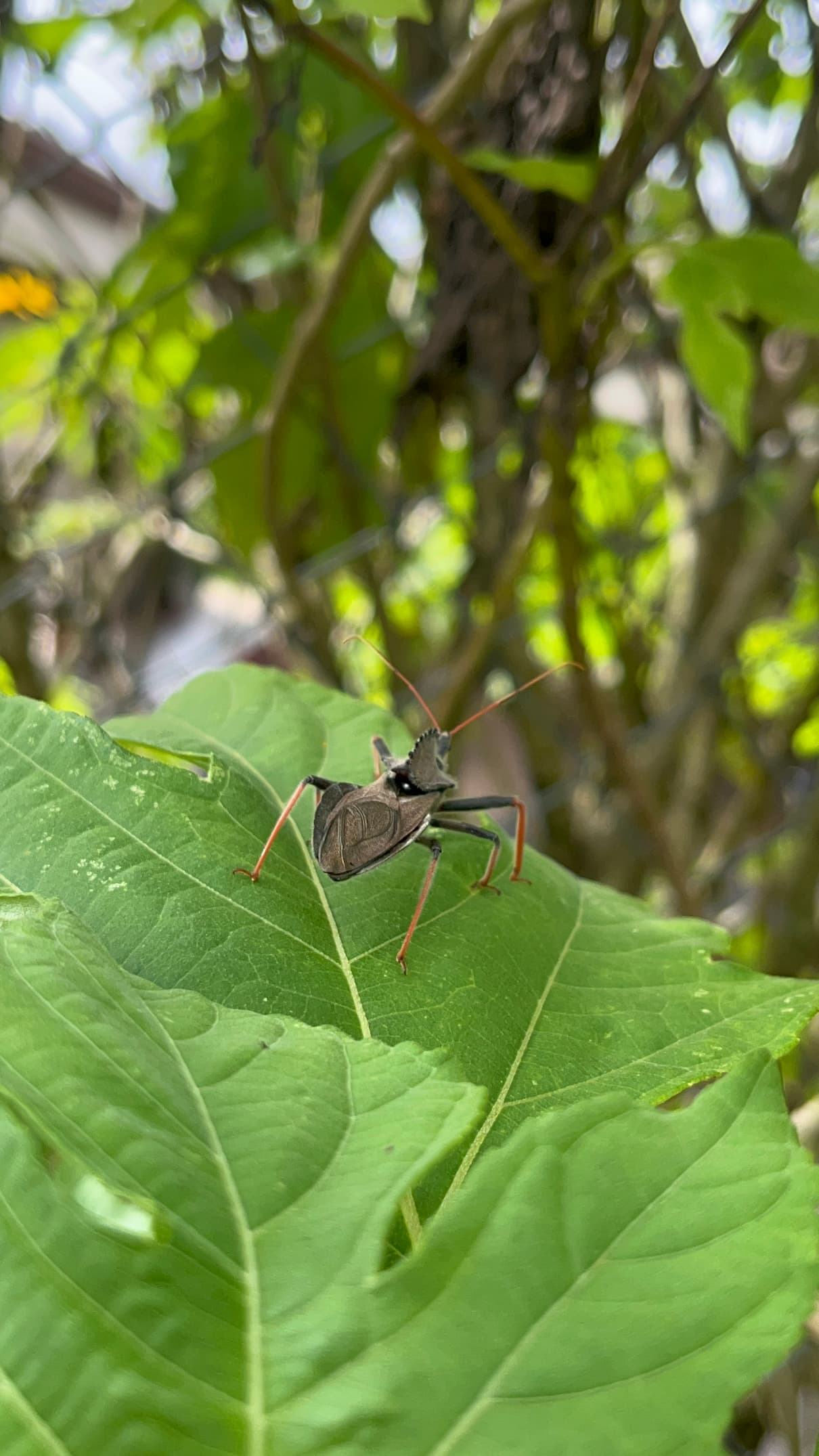
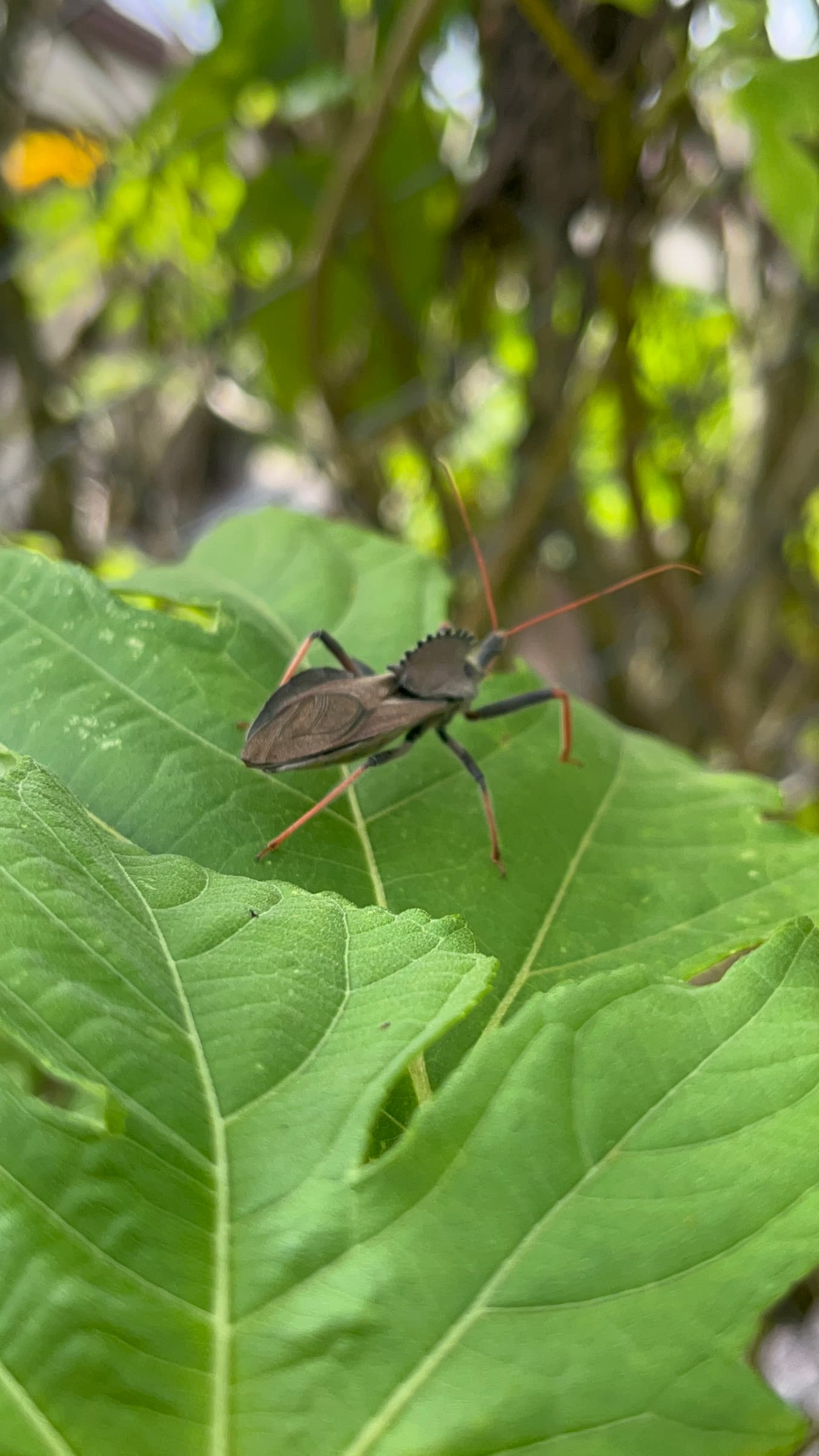
The Arilus cristatus, commonly known as the Wheel Bug, is a large predatory assassin bug recognized by the distinctive gear-like crest on its thorax. It is an ambush hunter that preys on caterpillars and other insects, using its piercing beak to inject digestive enzymes. While not medically dangerous, its defensive bite is known to be extremely painful.
RangeNative primarily to: United States, Mexico, parts of Central America
Typically found in: Forest edges, gardens, agricultural fields, shrublands, areas rich in insect prey. Observations around higher, cooler areas. It usually rests on vegetation, remaining still while waiting to ambush prey.
BehaviorA highly effective ambush predator that feeds on:
It pierces prey with its rostrum and injects digestive enzymes that liquefy internal tissues before ingestion (extra-oral digestion).
ReproductionThe Arilus cristatus reproduces sexually, with females laying clustered masses of barrel-shaped eggs on bark or other firm surfaces; after hatching, the nymphs pass through several developmental stages (instars), gradually molting and developing the characteristic thoracic crest before reaching adulthood, completing a life cycle that typically lasts about one year.
PoisonNot dangerous in a medical sense, but its bite is extremely painful. It uses its rostrum defensively if handled. Pain level: High
Specification 🧬Latin name: Arilus cristatus
Family: Reduviidae (Assassin Bugs)
Size: 28–36 mm
Weight: ~0.5–1.2 g
Lifespan: ~5–10 days


















🎁 Fun Fact:
The “wheel” is a hardened extension of the thorax and is unique among North American insects. It is considered beneficial in gardens because it preys on pest caterpillars. Despite its intimidating appearance, it prefers to avoid confrontation.
⚠️ Advice:
If you encounter a wheel bug:
- Do not handle it with bare hands.
- Avoid sudden contact when grabbing branches or leaves.
- Observe from a distance — it poses no threat unless touched.
In gardens, it should be left undisturbed, as it helps naturally control pest populations.