National Park
Cahuita National Park is located on Costa Rica’s southern Caribbean coast, next to the town of Cahuita. The park protects both coastal rainforest and marine ecosystems, combining forest trails, white-sand beaches, and coral reefs within a single area.
The main trail is flat and runs along the coastline, making the park easy to explore on foot. Wildlife is often seen directly from the path, including monkeys, raccoons, iguanas, frogs, birds, and crabs. The marine section of the park includes coral reefs, and Cahuita is one of the few national parks in Costa Rica where snorkeling is officially allowed.
📍 Where It’s Located
Cahuita National Park is located on Costa Rica’s southern Caribbean coast, near the town of Cahuita in Limón province.
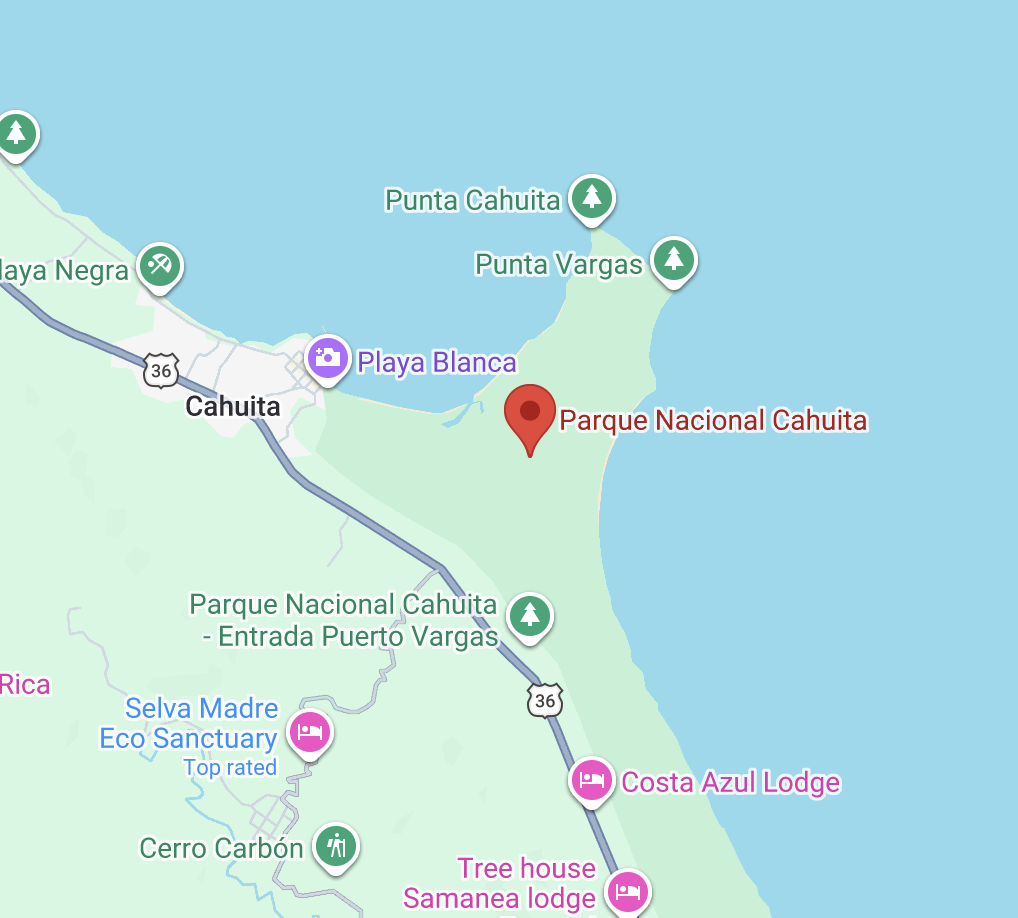
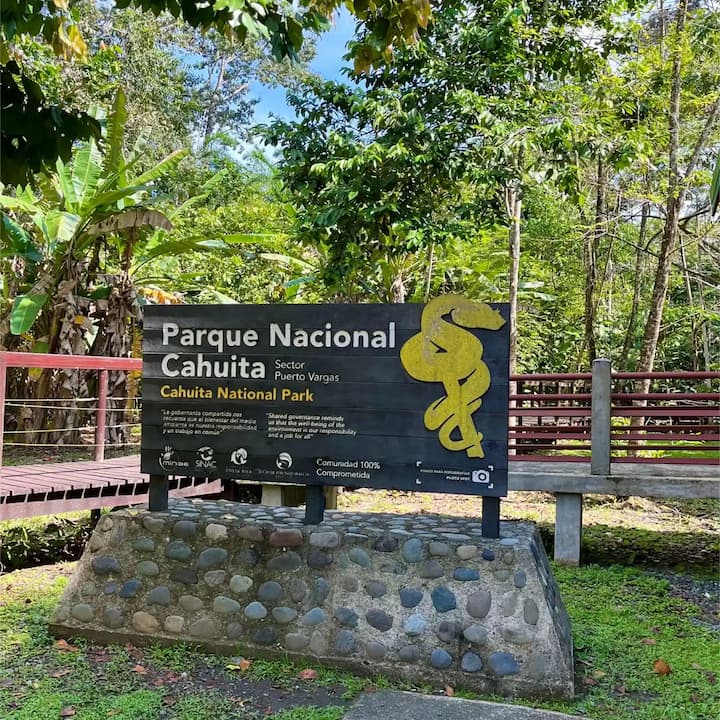
Entry through the Cahuita town access is donation-based, while the Puerto Vargas entrance has a fixed fee. The park can be reached by car or public bus from Limón or Puerto Viejo. Early mornings are recommended for wildlife spotting and fewer visitors.

The park is known for its flat coastal trail, white-sand beaches, coral reefs, and easy access compared to many other national parks.The main trail runs along the coastline and is suitable for walking at a relaxed pace. Wildlife is commonly seen directly from the path, including monkeys, raccoons, iguanas, and various bird species.
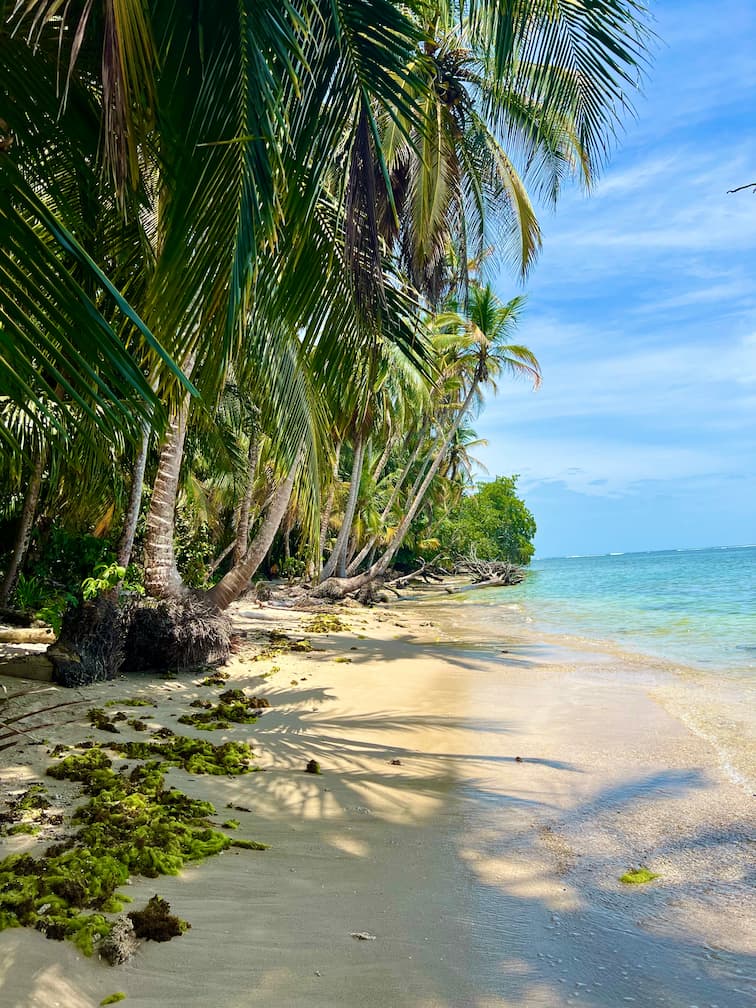
A flat trail runs directly along the shoreline, connecting forest and beach in one continuous walk.
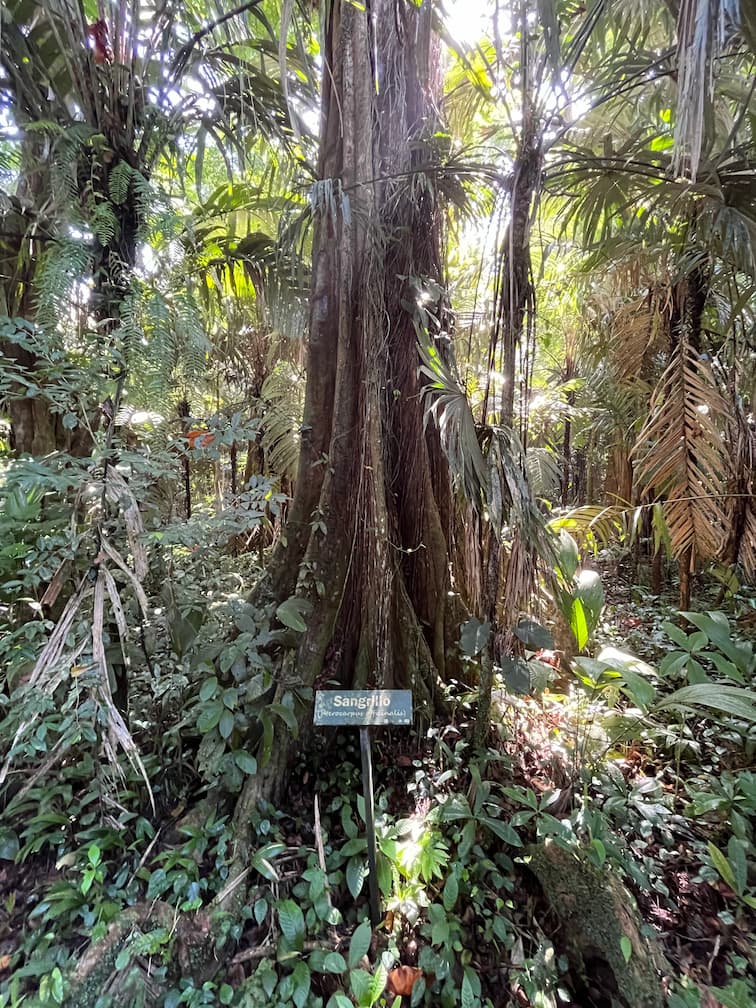
The sangrillo tree is easy to recognize by its smooth bark and the reddish sap that appears when the trunk is damaged. This sap is where the tree gets its name and is sometimes called “bleeding” wood. Sangrillo is common in Caribbean lowland forests and plays an important role in stabilizing soil in wet areas. An interesting detail: the sap has traditionally been used by local communities for medicinal purposes, mainly to treat skin irritations.

A white-faced capuchin moves through the trees near the trail. It stays alert and active, rarely stopping in one place for long.
![[digital project] image of pr tips infographic (for a pr firm)](https://cdn.prod.website-files.com/687c4c4d12c709bfff808b11/697bb228a0b0f460a5e61095_cahuita-park-9.jpg)
Cahuita National Park protects one of the largest coral reef systems on Costa Rica’s Caribbean coast. The reef lies close to shore and is part of the park’s protected marine area. When sea conditions are calm, the water is clear enough to see coral formations, tropical fish, sea urchins, and other marine life.
Snorkeling here feels unhurried and natural. There are no platforms or artificial structures — just reef, sand, and shallow water. The marine protection helps maintain a balanced ecosystem, making Cahuita an important site for both coral conservation and marine biodiversity.
💵 Entry Fees
Cahuita Town Entrance: donation-based (suggested contribution, usually around $5 USD per person)
Puerto Vargas Entrance: fixed fee (typically around $5–10 USD per person)
✍️Useful Tips
- Bring water, sun protection, and insect repellent
- Snorkeling is best during calm sea conditions
- Facilities inside the park are minimal, especially along the trail
- Cahuita is best experienced at a slow pace — walking, observing, and letting the forest and coastline unfold naturally.
![[digital project] image of pr tips infographic (for a pr firm)](https://cdn.prod.website-files.com/687c4c4d12c709bfff808b11/697bb2282944cbd10244685c_cahuita-park-17.jpg)
Tall palms line parts of the park, growing close together and forming open, shaded corridors. These areas feel especially calm, with filtered light and steady ocean sounds in the background.
The coastline in Cahuita constantly shifts with tides and storms. Fallen trees, exposed roots, and changing sand patterns show how active and dynamic this environment is.
![[digital project] image of pr tips infographic (for a pr firm)](https://cdn.prod.website-files.com/687c4c4d12c709bfff808b11/697bb22814c79d667c5392c5_cahuita-park-16.jpg)
Only wooden posts remain from an old pier, weathered by salt and time. Long before Cahuita became a national park, this stretch of coast was used by traders and sailors moving along the Caribbean. The shoreline also carries stories of pirates who once navigated these waters, using hidden coves and reefs for shelter. Today, the sea has taken back what was built here, leaving only traces behind.
![[digital project] image of pr tips infographic (for a pr firm)](https://cdn.prod.website-files.com/687c4c4d12c709bfff808b11/697bb22a968d2f2f96f7410e_cahuita-park-15.jpg)
Raccoons in Cahuita are curious and adaptable. During the day, they are often seen sleeping on branches or resting in shaded areas. When active, they move slowly and carefully, checking their surroundings and searching for food near the forest edge and beach.
![[digital project] image of pr tips infographic (for a pr firm)](https://cdn.prod.website-files.com/687c4c4d12c709bfff808b11/697bb22ad83c28dcce1d981b_cahuita-park-10.jpg)
A chestnut-billed toucan sits quietly in the canopy, its large bill standing out against the surrounding leaves. It stays in place for a while before moving deeper into the trees.
![[digital project] image of pr tips infographic (for a pr firm)](https://cdn.prod.website-files.com/687c4c4d12c709bfff808b11/697bb22ae10c865e9baae5f2_cahuita-park-13.jpg)
This green-and-black poison dart frog is poisonous and is usually found near the forest floor, close to fallen leaves and damp areas. Its bright green and black pattern acts as a natural warning to predators. While small, it’s one of the most recognizable amphibians in Caribbean lowland forests. I have seen it close to the park entrance.
![[digital project] image of pr tips infographic (for a pr firm)](https://cdn.prod.website-files.com/687c4c4d12c709bfff808b11/697bb22a22d61a292feab126_cahuita-park-12.jpg)
A hermit crab moves slowly across the sand, testing empty shells as it goes. Unlike other crabs, it doesn’t grow its own shell and must constantly search for a larger one as it grows. Finding the right shell is critical — too small offers no protection, too large makes movement difficult. This constant search shapes much of a hermit crab’s daily behavior.
![[digital project] image of pr tips infographic (for a pr firm)](https://cdn.prod.website-files.com/687c4c4d12c709bfff808b11/697bb22831651db659bc13ac_cahuita-park-3.jpg)
Some lagoons in and around Cahuita can be home to crocodiles, especially where freshwater meets the sea. They are rarely seen here, but this possibility is one reason swimming is recommended only along open beach areas and not in still or murky water.
![[digital project] image of pr tips infographic (for a pr firm)](https://cdn.prod.website-files.com/687c4c4d12c709bfff808b11/697bb228ab9a4f5c92a5c8ef_cahuita-park-5.jpg)
The caterpillar in the image belongs to the genus Hylesia, which is widely distributed in the Neotropical region. These caterpillars are venomous, and contact with their hairs can cause skin irritation.
![[digital project] image of pr tips infographic (for a pr firm)](https://cdn.prod.website-files.com/687c4c4d12c709bfff808b11/697bb2283748934a1f858534_cahuita-park-1.jpg)
The tree in the image is a strangler fig, one of the most distinctive trees in tropical forests. It begins life high in the canopy, growing down around a host tree. Over time, its roots reach the ground, thicken, and gradually surround the original tree, often outliving it. Strangler figs create complex root systems that provide shelter for insects, reptiles, birds, and small mammals, making them an important part of the forest ecosystem.
![[digital project] image of pr tips infographic (for a pr firm)](https://cdn.prod.website-files.com/687c4c4d12c709bfff808b11/697bb228e4582ec9dd51b46b_cahuita-park-2.jpg)
White-faced capuchins are highly intelligent and very curious. In Cahuita, they are known for stealing unattended items such as bags, food, or water bottles. They can become aggressive if approached too closely, so keeping distance and securing belongings is important.